India revives Netra Mk-II AWACS after Airbus cost dispute
An Indian Air Force AWACS aircraft on display at Aero India 2025. (Photo: author)
India has cleared higher retrofit costs for six ageing Airbus A321s to be converted into Netra Mk-II airborne surveillance platforms, marking progress in a long-delayed AWACS programme but raising questions over lifespan and operational value.


India has finally agreed to the increased structural modification costs demanded by Airbus for six aging A321 aircraft earmarked for its Netra Mk-II Airborne Warning and Control System (AWACS) programme.
The aircraft, originally acquired from Air India by the Indian Air Force (IAF) in 2021, are now nearly 20 years old and will undergo structural retrofit at Airbus’s facility in Spain once the contract has been signed.
The decision marks a critical step forward for the indigenous Netra Mk-II which aims to bolster India’s airborne surveillance capabilities. After reconfiguration, the airframes will be handed to the Centre for Airborne Systems
Our news & analysis is now part of Defence Insight®
A Basic-level or higher Defence Insight subscription is now required to view this content.

More from Air Warfare
-
![UK SMEs remain vulnerable in effort to help build sovereign capabilities, JCNSS report warns]()
UK SMEs remain vulnerable in effort to help build sovereign capabilities, JCNSS report warns
The report comes as heads of industry bodies warn that the delayed defence spending plan has left smaller and medium sized businesses in stasis, unable to plan or seek out further investment.
-
![Norway revitalises effort to acquire a tactical-class UAV with $103 million competition]()
Norway revitalises effort to acquire a tactical-class UAV with $103 million competition
Norway first scoped the requirement in 2022, and included it in a defence strategy document in 2023. The announcement of a new framework agreement appears to have breathed fresh life into the effort.
-
![March Drone Digest: Long-range, low-cost loitering munitions are changing warfare economics]()
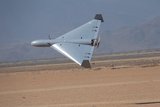
March Drone Digest: Long-range, low-cost loitering munitions are changing warfare economics
The effective use of the Shahed-136 in the Iran war has highlighted the need for countries to acquire a domestically produced, low-cost, long-range loitering munition, with the US, Turkey and European nations all at various stages of developing a similar capability.
-
![US Air Force is eyeing cost-effective automated counter-drone solutions]()
US Air Force is eyeing cost-effective automated counter-drone solutions
The USAF is seeking on-the-move systems, subsystems or technologies capable of defending airbases and fixed and semi-fixed sites against small drone attacks.