India fast-tracks helicopter procurement with dual RFIs for 276 platforms
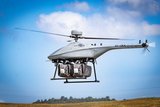
The Indian Army has been seeking a replacement for its Chetak fleets. (Photo: Indian Army)
India has issued urgent RFIs for more than 270 reconnaissance, surveillance and utility helicopters across its services, signalling a systemic overhaul of rotary-wing capabilities with a renewed emphasis on indigenous production and technology transfer.


India has moved to overhaul its rotary-wing fleet with two major Requests for Information (RFIs) that together seek 276 new helicopters across the country’s Army, Air Force, Navy and Coast Guard.
The first RFI, released this month, covers an “urgent” requirement for 200 Reconnaissance and Surveillance Helicopters (RSH) – 120 for the Army and 80 for the Air Force. A second RFI, issued on 22 August, calls for 76 Naval Utility Helicopters (NUH), with 51 destined for the Navy and 25 for the Coast Guard. Both efforts emphasise indigenous production, technology transfer and long-term lifecycle support, marking a shift from
Our news & analysis is now part of Defence Insight®
A Basic-level or higher Defence Insight subscription is now required to view this content.




More from Air Warfare
-
![AFA 2026: US Air Force examines uncrewed cargo aircraft for contested logistics]()
AFA 2026: US Air Force examines uncrewed cargo aircraft for contested logistics
The US Air Force is evaluating demonstrators for uncrewed cargo missions as it considers logistics requirements across the Pacific and other contested environments.
-
![Germany air focus: Europe’s leading near-term air market targets domestic industry]()
Germany air focus: Europe’s leading near-term air market targets domestic industry
Between 2026 and 2032, almost a quarter of EU aircraft spending is expected to come from Germany. While crewed programmes seek modernisation and replacement, uncrewed opportunities look to introduce entirely new capabilities, with both highlighting sovereignty and domestic production.
-
![Europe risks losing control of CUAS production capacity as manufacturers look abroad]()
Europe risks losing control of CUAS production capacity as manufacturers look abroad
European counter-drone developers are securing early orders in the Middle East while slow domestic acquisition processes threaten to redirect production capacity, expertise and investment away from Europe.
-
![AFA 2026: Swarm Aero eyes 2027 Gamera flight as Textron/Merlin reveal SkyCourier UX]()
AFA 2026: Swarm Aero eyes 2027 Gamera flight as Textron/Merlin reveal SkyCourier UX
Two new uncrewed aircraft concepts target very different US military requirements, from massed long-range strike to autonomous logistics. Shephard spoke with executives from Swarm Aero, Textron Aviation and Merlin Labs at this year's AFA Air, Space & Cyber conference to learn more about their capabilities.