Hungarian Air Force takes ownership of its first C-390 Millennium
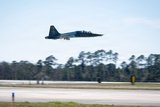
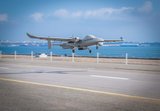
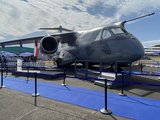
Hungary has taken ownership of its first C-390. (Photo: Embraer)
The move makes Hungary the second C-390 operator within the NATO alliance.


Embraer has delivered the Hungarian Air Force its first C-390 Millennium multi-mission aircraft. The aircraft will be the first model of its kind to be equipped with a roll-on/roll-off Intensive Care Unit, allowing for faster, more effective humanitarian and medevac missions.
The delivery makes Hungary only the second C-390 operator within the NATO alliance. It will enhance the Hungarian Air Force’s capabilities across a broad range of military and civilian mission profiles including medical evacuation, humanitarian support, search and rescue, cargo and troop transport, precision cargo airdrop, paratrooper operations and air-to-air refuelling.
The C-390 can carry more payload (26 tons) than similar medium-sized military transport aircraft and can fly up to 470 knots.
Related Articles
Dutch and Austrian governments collaborate on Embraer C-390 acquisition at Farnborough
Embraer KC-390 puts on a show for the Mexican Air Force
The air-to-air-refuelling version of the C-390, the KC-390, can both give and receive fuel in mid-air, assuming a second KC-390 is available to feed it fuel from pods installed under its wings.
The current fleet of C-390 aircraft operating in the world, including those within the Brazilian Air Force and the Portuguese Air Force, has accumulated more than 14,000 flight hours, with a mission capable rate of 93% and mission completion rates above 99%.
Hungary’s minister of defence Kristóf Szalay-Bobrovniczky said the C-390 would give the Hungarian Air Force unprecedented capabilities in military air transport.
“It is in Hungary’s security interest to have strong, well-equipped, modern defence forces, and we are working on that,” he remarked.
Related Programmes in Defence Insight

More from Air Warfare
-
![July drone digest: Sovereign production takes centre stage at Farnborough]()
July drone digest: Sovereign production takes centre stage at Farnborough
Farnborough International Airshow (FIA) 2026 revealed the growing scale of the UK’s uncrewed ambitions, with companies showcasing new CCA, autonomous wingmen and surveillance drones, while sovereign production emerged as a key factor for multiple programmes.
-
![July air forces review: Farnborough steals the headlines as programmes develop]()
July air forces review: Farnborough steals the headlines as programmes develop
The biannual Farnborough International Airshow 2026 was the backdrop in July for scores of deals, partnerships and announcements, including developments in the multinational next-generation Global Combat Air Programme and the UK’s $486 million trainer aircraft requirement.
-
![Maximise survivability with advanced electronic warfare (video)]()
Maximise survivability with advanced electronic warfare (video)
BAE Systems’ all-digital EW delivers 360-degree threat awareness in contested environments, boosts survivability, and cuts lifecycle costs.
-
![US Air Force seeks avionics upgrades for ageing T-38 Talon as T-7A Red Hawk delays persist]()
US Air Force seeks avionics upgrades for ageing T-38 Talon as T-7A Red Hawk delays persist
The USAF is looking for commercial avionics solutions to improve the T-38 Talon’s reliability, readiness and flight safety as continued T-7A Red Hawk delays increase the likelihood that the legacy trainer will remain in service longer than planned.
-
![British Army’s Project Corvus selection highlights new era of drone sovereignty]()
British Army’s Project Corvus selection highlights new era of drone sovereignty
The UK’s choice of the Tekever AR5 for Project Corvus reflects a wider shift in military drone procurement towards solutions that centre on sovereignty and domestic production, moving away from overseas reliance.