Hungarian Air Force takes ownership of its first C-390 Millennium
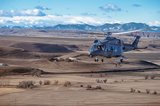
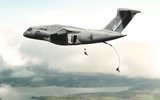
Hungary has taken ownership of its first C-390. (Photo: Embraer)
The move makes Hungary the second C-390 operator within the NATO alliance.


Embraer has delivered the Hungarian Air Force its first C-390 Millennium multi-mission aircraft. The aircraft will be the first model of its kind to be equipped with a roll-on/roll-off Intensive Care Unit, allowing for faster, more effective humanitarian and medevac missions.
The delivery makes Hungary only the second C-390 operator within the NATO alliance. It will enhance the Hungarian Air Force’s capabilities across a broad range of military and civilian mission profiles including medical evacuation, humanitarian support, search and rescue, cargo and troop transport, precision cargo airdrop, paratrooper operations and air-to-air refuelling.
The C-390 can carry more payload (26 tons) than similar medium-sized military transport aircraft and can fly up to 470 knots.
Related Articles
Dutch and Austrian governments collaborate on Embraer C-390 acquisition at Farnborough
Embraer KC-390 puts on a show for the Mexican Air Force
The air-to-air-refuelling version of the C-390, the KC-390, can both give and receive fuel in mid-air, assuming a second KC-390 is available to feed it fuel from pods installed under its wings.
The current fleet of C-390 aircraft operating in the world, including those within the Brazilian Air Force and the Portuguese Air Force, has accumulated more than 14,000 flight hours, with a mission capable rate of 93% and mission completion rates above 99%.
Hungary’s minister of defence Kristóf Szalay-Bobrovniczky said the C-390 would give the Hungarian Air Force unprecedented capabilities in military air transport.
“It is in Hungary’s security interest to have strong, well-equipped, modern defence forces, and we are working on that,” he remarked.
Related Programmes in Defence Insight

You may also like

More from Air Warfare
-
![USAF eyes sensor and weapon upgrades as MH-139A Grey Wolf achieves IOC]()
USAF eyes sensor and weapon upgrades as MH-139A Grey Wolf achieves IOC
The Grey Wolf has entered operational service nearly three years later than originally planned, while new sustainment contracts indicate that some UH-1Ns could remain supported until 2031.
-
![How geopolitics and new military alliances are disrupting combat aircraft procurement]()
How geopolitics and new military alliances are disrupting combat aircraft procurement
Selection of fighter aircraft by national governments has always been political. As markets and allegiances shift against a background of global realignment, who will be the winners and losers as new entrants compete with established suppliers?
-
![Singapore’s interest in GCAP reflects its long-term approach to air power]()
Singapore’s interest in GCAP reflects its long-term approach to air power
A potential interest in joining GCAP is indicative of Singapore’s long-term and methodical approach to defence procurement and could benefit its local defence industry.
-
![Extending mission readiness: where XR adds real value in pilot, crew and maintenance training]()
Extending mission readiness: where XR adds real value in pilot, crew and maintenance training
Extended reality (XR) is becoming increasingly relevant in military aviation training, adding a flexible layer to an integrated ecosystem spanning the pilot, crew, and maintenance domains.
-
![US military tests AI-powered CUAS turret against drone swarms]()
US military tests AI-powered CUAS turret against drone swarms
As the US continues to invest heavily in counter-drone systems, demand for low-cost, mobile and autonomous technologies is on the rise, with Edda designed to align with these emerging requirements.
-
![August crewed air review: KC-390 momentum builds as demand in the tanker market grows]()
August crewed air review: KC-390 momentum builds as demand in the tanker market grows
The KC-390 is building a growing international operator base, but competition in the transport and tanker market is increasingly likely to depend on interoperability, commonality and the strength of supporting ecosystems. Meanwhile, Boeing’s KC-46 and Airbus’s A330 also gained ground in August.