General Atomics unveils XQ-67A combat drone
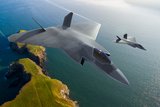
The Off-Board Sensing Station (OBSS) is a USAF developmental programme to create a crewed-uncrewed teaming platform. (Photo: GA-ASI)
The development of the XQ-67A was set out to create a platform capable of crewed-uncrewed teaming, with noticeable visual similarities to existing advanced UAS.


General Atomics Aeronautical Systems (GA-ASI) has unveiled its new uncrewed combat aerial vehicle (UCAV), the XQ-67A, as part of the US Air Force’s (USAF) Off-Board Sensing Station (OBSS).
Although the platform’s features largely remained secretive, the images released by the manufacturer showed that the drone has a splayed v-tail, a main wing with a low sweep, a retractable tricycle landing gear and a top-mounted dorsal engine intake. Visually, the drone resembles the Avenger, MQ-25 Stingray tanker and the XQ-58 Valkyrie.
“Without getting into specifics…we are stepping through that programme methodically and working closely with our government partners
Our news & analysis is now part of Defence Insight®
A Basic-level or higher Defence Insight subscription is now required to view this content.




More from Air Warfare
-
![USAF eyes sensor and weapon upgrades as MH-139A Grey Wolf achieves IOC]()
USAF eyes sensor and weapon upgrades as MH-139A Grey Wolf achieves IOC
The Grey Wolf has entered operational service nearly three years later than originally planned, while new sustainment contracts indicate that some UH-1Ns could remain supported until 2031.
-
![How geopolitics and new military alliances are disrupting combat aircraft procurement]()
How geopolitics and new military alliances are disrupting combat aircraft procurement
Selection of fighter aircraft by national governments has always been political. As markets and allegiances shift against a background of global realignment, who will be the winners and losers as new entrants compete with established suppliers?
-
![Singapore’s interest in GCAP reflects its long-term approach to air power]()
Singapore’s interest in GCAP reflects its long-term approach to air power
A potential interest in joining GCAP is indicative of Singapore’s long-term and methodical approach to defence procurement and could benefit its local defence industry.
-
![Extending mission readiness: where XR adds real value in pilot, crew and maintenance training]()
Extending mission readiness: where XR adds real value in pilot, crew and maintenance training
Extended reality (XR) is becoming increasingly relevant in military aviation training, adding a flexible layer to an integrated ecosystem spanning the pilot, crew, and maintenance domains.