Doodle Labs expands use of its radios on UAV systems
The Freefly Astro UAS is being validated for US DoD approved list. (Photo: Freefly)
Mesh Rider is a SWaP (Size, Weight and Power) optimised mesh radio designed for uncrewed systems and supports six frequency bands in a single transceiver and AES-256 encryption. It was developed in cooperation with the US Defense Innovation Unit.


Doodle Labs’ Mesh Rider radios have been integrated into Evolve Dynamics’ Sky Mantis 2 and will be integrated onto Freefly’s Astro UAS under plans announced on 18 April with the latter system to be displayed at AUVSI Xponential in San Diego, taking place on April 23–25.
The Astro will be integrated with the Mini-Mesh Rider radio and is in the final stages of validation to join the DoD/DIU Blue UAS Cleared List. It is already in service with US Department of Interior, US Forest Service and other fire management groups, plus commercial and industrial customers.
The platform’s radios currently operate in an unlicensed frequency band to support commercial UAS operations while mitigating radio-frequency interference in both urban and rural environments.
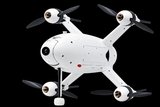
The Helix Mesh Rider Radio for Sky Mantis 2, a small quadcopter platform unveiled earlier this month, is designed for defence applications, having been developed with sponsorship from the US DoD’s Defense Innovation Unit (DoD/DIU). It is on the Blue UAS programme’s cleared list for components.
Helix Mesh Rider radio will be fitted as standard, offering resilient long-range communications with 256-bit AES software data encryption and the ability to transmit reliably two simultaneous video streams (HD daylight and thermal), telemetry and C&C all at once across the same datalink.
Doodle Labs said: “The integration secures resilient connectivity, full data encryption and advanced interference-avoidance for the Sky Mantis 2, which has been field-tested in highly-contested airspace in support of Ukrainian defence forces in the face of active Russian jamming attempts.”
Related Equipment in Defence Insight

More from Air Warfare
-
![India’s military integration drive faces interoperability hurdles]()
India’s military integration drive faces interoperability hurdles
Senior military leaders have highlighted the need for interoperable systems, common data standards and closer cooperation between India's armed services.
-
![UK A400M Saudi deployment highlights airlifter’s role as Airbus pursues upgrades]()
UK A400M Saudi deployment highlights airlifter’s role as Airbus pursues upgrades
Airbus is developing new capabilities for its A400M transport aircraft as European countries consider future airlift requirements and the UK plans to deploy the aircraft to Saudi Arabia.
-
![The new generation of defence companies emerging from the US UAV boom]()
The new generation of defence companies emerging from the US UAV boom
As the Pentagon accelerates procurement of low-cost, lethal UAVs through its Drone Dominance Program, emerging suppliers will need to demonstrate manufacturing capacity, supply chain resilience and reliability.