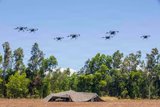
Dominator XP UAVs are commissioned into Thai air force
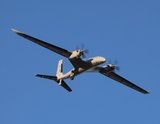
Thailand introduced three Dominator XP MALE UAVs into service on 1 September. (Photo: RTAF)
Thailand has adopted its first ever UAVs in the medium-altitude long-endurance class.


The Royal Thai Air Force (RTAF) inducted three Dominator XPs, Thailand’s first MALE UAV, for military and civilian missions on 1 September.
ACM Alongkorn Wannarot, Commander-in-Chief of the RTAF, presided over the ceremony for the Dominator XP at Squadron 302, Wing 3, which is based in Nakhon Sawan Province.
The RTAF purchased the trio of Dominator XPs, along with spare parts, equipment, logistics support and training courses, from Israel’s Aeronautics Defense Systems. This was done with a budget commitment of $27 million between 2018 and 2021.
The Dominator XP is a pilotless DA42 platform, with the RTAF already operating the
Our news & analysis is now part of Defence Insight®
A Basic-level or higher Defence Insight subscription is now required to view this content.



More from Air Warfare
-
![US Army extended-range CUAS missile ramjet work to continue through December 2029]()
US Army extended-range CUAS missile ramjet work to continue through December 2029
Northrop Grumman’s US$18.8 million XRC propulsion contract runs through December 2029, but performance targets and the pathway to operational fielding remain undisclosed.
-
![Saab’s GlobalEye gains ground as Canada’s aircraft procurement tilts towards Europe]()
Saab’s GlobalEye gains ground as Canada’s aircraft procurement tilts towards Europe
Canada’s interest in negotiating a procurement of Saab’s GlobalEye airborne early warning and control aircraft signals its readiness to reduce its reliance on US defence technology as trade tensions with its North American neighbour mount.
-
![US Air Force CCA programme to achieve multiple milestones in the coming months]()
US Air Force CCA programme to achieve multiple milestones in the coming months
The US Air Force is preparing to select mission-autonomy software, fire a missile from the FQ-42 Vengeance and test both CCA designs alongside crewed fighters at 2026 Emerald Flag.
-
![South American EW demand balances capability against cost]()
South American EW demand balances capability against cost
South American air forces are weighing advanced electronic warfare capabilities against limited budgets as Peru selects Viper Shield and BAE Systems targets smaller airborne platforms.