Bulgaria’s first F-16 Block 70 takes flight
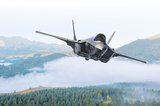
The F-16V is currently operated by 27 countries, with six countries selecting the F-16 Block 70/72 version for their fleets. (Photo: Lockheed Martin)
Bulgaria has ordered a total of 16 F-16 Block 70 fighters, which will be delivered in two batches. Deliveries for the first lot are anticipated to commence in 2025.


Lockheed Martin has announced the successful flight of the first Bulgarian F-16 Block 70 aircraft. The flight took place on 22 October at its production facility in Greenville, South Carolina. Multiple system tests to validate the aircraft’s performance and supersonic capabilities were carried out during the flight, Lockheed confirmed.
In 2019, Bulgaria first signed a Letter of Acceptance (LOA) for eight F-16s, and a second LOA for an additional eight jets in 2022. The F-16s will reportedly replace the Air Force’s ageing Soviet-era MiG-29s. Block 70 is the latest version of Lockheed’s F-16 design and features advances avionics, an APG-83 radar and a modernised cockpit with new safety features.
OJ Sanchez, VP and general manager for the Integrated Fighter Group at Lockheed Martin said: “With the F-16 Block 70, the Bulgarian Air Force will be well-equipped to secure its borders and partner with US, European and NATO allies.”
According to Shephard Defence Insight, the procurement cost for eight aircraft has been calculated to be around US$500 million. However, the $1.3 billion deal made with the government includes the aircraft, along with related equipment, weapons, raining and logistics support.
As noted by the Bulgarian Ministry of Defence, the first batch of eight F-16s are anticipated to be delivered in 2025. The second batch of eight F-16s will follow in 2027. Bulgaria will become the second European country to receive the F-16 Block 70 aircraft.
According to Bulgarian Military, however, this jet – and a second jet – will remain stationed in the US to be used as training platforms for incoming Bulgarian pilots.
Related Programmes in Defence Insight
Related Equipment in Defence Insight

More from Air Warfare
-
![V-22 Osprey safety upgrade moves towards wider fleet installation under $35.5 million deal]()
V-22 Osprey safety upgrade moves towards wider fleet installation under $35.5 million deal
Bell Boeing will supply 73 additional ODSSHI kits as NAVAIR prepares to introduce predictive drive-system monitoring across US and Japanese V-22 fleets.
-
![AFA 2026: USAF examines uncrewed cargo aircraft for contested logistics]()
AFA 2026: USAF examines uncrewed cargo aircraft for contested logistics
The US Air Force is evaluating demonstrators for uncrewed cargo missions as it considers logistics requirements across the Pacific and other contested environments.
-
![Europe risks losing control of CUAS production capacity as manufacturers look abroad]()
Europe risks losing control of CUAS production capacity as manufacturers look abroad
European counter-drone developers are securing early orders in the Middle East while slow domestic acquisition processes threaten to redirect production capacity, expertise and investment away from Europe.
-
![India’s rotary-wing capability gap grows as IMRH programme delays persist]()
India’s rotary-wing capability gap grows as IMRH programme delays persist
With IMRH and DBMRH potentially years from service, India faces a widening rotary-wing capability gap that could drive further foreign purchases even as HAL and Safran build the foundations of an indigenous successor.
-
![AFA 2026: Swarm Aero eyes 2027 Gamera flight as Textron/Merlin reveal SkyCourier UX]()
AFA 2026: Swarm Aero eyes 2027 Gamera flight as Textron/Merlin reveal SkyCourier UX
Two new uncrewed aircraft concepts target very different US military requirements, from massed long-range strike to autonomous logistics. Shephard spoke with executives from Swarm Aero, Textron Aviation and Merlin Labs at this year's AFA Air, Space & Cyber conference to learn more about their capabilities.