British Army drone operators gain expertise
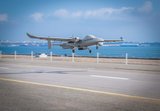
The Stalker drone, pictured above, is designed to combine the flexibility of a portable system with the endurance and payload performance of a larger, more costly vehicle. (Photo: British Army)
The British Army has contracted Inzpire to supply UAS training services to its operators in support of a mini drone contract led by Lockheed Martin UK.


The contract, a part of Project Tiquila, outlines the delivery of 15 rotary-wing Indago 4 devices and 99 fixed-wing Stalker VXE30 drones from Lockheed Martin to the British Army. These UAVs will provide imaging and surveillance capabilities.
According to Shephard Defence Insight, the contract is valued at £129 million with a timeline of ten years.
Inzpire will supply training needs analysis, training design and training delivery services to British Army UAS instructors to ensure the devices are integrated effectively.
The company’s experts will deliver theoretical and live training content, and design a tailored training package that is continuously evolving to support the lifecycle of new capabilities.
The fixed-wing Stalker drone weighs over 20kg and has a 4.88m wingspan. It provides over eight hours of imaging capability and is able to cover around 60mi.
The rotary-wing Indago 4 is foldable and weighs less than 2.5kg. It can be carried in a soldier’s backpack and deployed in just two minutes with a range of eight miles.
While this is the first time Inzpire will provide training services to the British Army, the company has previously provided training to RAF RPAS crews.
Related Programmes in Defence Insight
Related Equipment in Defence Insight


More from Air Warfare
-
![July air forces review: Farnborough steals the headlines as programmes develop]()
July air forces review: Farnborough steals the headlines as programmes develop
The biannual Farnborough International Airshow 2026 was the backdrop in July for scores of deals, partnerships and announcements, including developments in the multinational next-generation Global Combat Air Programme and the UK’s $486 million trainer aircraft requirement.
-
![FIA 2026: Bell highlights MOSA-driven growth path for MV-75 Cheyenne]()
FIA 2026: Bell highlights MOSA-driven growth path for MV-75 Cheyenne
Bell Flight’s modular open-systems approach for the US Army’s MV-75 Cheyenne could open doors for international allies and suppliers once locked out by closed rotorcraft architectures.
-
![Maximise survivability with advanced electronic warfare (video)]()
Maximise survivability with advanced electronic warfare (video)
BAE Systems’ all-digital EW delivers 360-degree threat awareness in contested environments, boosts survivability, and cuts lifecycle costs.
-
![US Air Force seeks avionics upgrades for ageing T-38 Talon as T-7A Red Hawk delays persist]()
US Air Force seeks avionics upgrades for ageing T-38 Talon as T-7A Red Hawk delays persist
The USAF is looking for commercial avionics solutions to improve the T-38 Talon’s reliability, readiness and flight safety as continued T-7A Red Hawk delays increase the likelihood that the legacy trainer will remain in service longer than planned.
-
![British Army’s Project Corvus selection highlights new era of drone sovereignty]()
British Army’s Project Corvus selection highlights new era of drone sovereignty
The UK’s choice of the Tekever AR5 for Project Corvus reflects a wider shift in military drone procurement towards solutions that centre on sovereignty and domestic production, moving away from overseas reliance.