Azerbaijan’s integral role in Turkish TF-X Kaan fighter programme strengthens defence capabilities and strategic ties
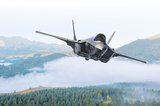
The KAAN fighter is currently undergoing trials and will conduct its maiden flight with a pair of General Electric F110 engines and will not be flying with indigenous-produced engines until 2028. (Photo: Turkish MoD)
‘By involving Azerbaijan [in the TF-X Kaan programme], Türkiye can potentially share the financial burden of the project, leading to cost savings and economic advantages for both countries,’ team lead for government contracting at Tusas Engine Industries tells Shephard.


Turkish Aerospace Industries (TAI) has recently signed a National Combat Aircraft Development Collaboration Protocol with Azerbaijan. The partnership seeks to include Azerbaijan in Türkiye’s domestically developed TF-X Kaan fifth-generation fighter jet programme.
The protocol aims to determine the working principles and procedures for collaboration between the partners, including the development activities of the National Combat Aircraft.
The agreement also works towards identifying what Azerbaijan can contribute to the KAAN programme. It will help prepare for production in the right facilities and companies, improve production abilities and make it easier to share knowledge and experiences.
Azerbaijan’s contribution
Although the announcement of
Our news & analysis is now part of Defence Insight®
A Basic-level or higher Defence Insight subscription is now required to view this content.



More from Air Warfare
-
![India’s rotary-wing capability gap grows as IMRH programme delays persist]()
India’s rotary-wing capability gap grows as IMRH programme delays persist
With IMRH and DBMRH potentially years from service, India faces a widening rotary-wing capability gap that could drive further foreign purchases even as HAL and Safran build the foundations of an indigenous successor.
-
![AFA 2026: Swarm Aero eyes 2027 Gamera flight as Textron/Merlin reveal SkyCourier UX]()
AFA 2026: Swarm Aero eyes 2027 Gamera flight as Textron/Merlin reveal SkyCourier UX
Two new uncrewed aircraft concepts target very different US military requirements, from massed long-range strike to autonomous logistics. Shephard spoke with executives from Swarm Aero, Textron Aviation and Merlin Labs at this year's AFA Air, Space & Cyber conference to learn more about their capabilities.
-
![US Navy moves EA-18G Growler Block II electronic-attack upgrade into full-rate production]()
US Navy moves EA-18G Growler Block II electronic-attack upgrade into full-rate production
A US$184.25 million contract for Next Generation Electronic Attack Units advances the Growler’s modernisation as the US Navy confronts ageing systems, parts shortages and obsolescence.
-
![Could the next UAS market boom take place beyond the battlefield?]()
Could the next UAS market boom take place beyond the battlefield?
While the headlines remain dominated by the use of drones for combat operations in Ukraine and other conflicts, there are emerging use cases where the technology could usefully feed back into areas and missions outside the war zone.