Anduril expands footprint in South Korea
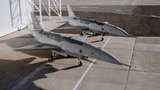
Korean Air is working on a loyal wingman drone for the South Korean air force. (Photo: Agency for Defense Development)
The US firm has signed agreements with HD Hyundai Heavy Industries (HII) and Korean Air to develop defence products for the South Korean market as well as license existing Anduril products for use and export to the region.


Anduril have partnered with HD Hyundai Heavy Industries and Korean Air to build uncrewed aerial and underwater vessels as part of the company’s wider expansion into Asia-Pacific, while also opening a new office on Seoul, South Korea.
According to the company, Anduril’s partnership with Korean Air’s Aerospace Division will see the two work to co-develop uncrewed aerial system (UAS) products, license existing Anduril products for use in the region and “explore potential” for setting up a manufacturing and production facility in South Korea.
Officials from Korean Air said Anduril will help it to “meet the Korean military's drone mission [and] autonomy
Already have an account? Log in
Want to keep reading this article?

More from Air Warfare
-
![France and India secure long-term defence roadmap built on shared production]()
France and India secure long-term defence roadmap built on shared production
Expanded fighter jet and missile production, next-generation engine cooperation and helicopter assembly deals have all been struck between the two countries, signalling a strengthening bilateral partnership between France and India.
-
![L3Harris begins work on South Korean AEW&C aircraft, eyes further international opportunities]()
L3Harris begins work on South Korean AEW&C aircraft, eyes further international opportunities
The company remains upbeat about its Indo-Pacific and European prospects, with its AERIS X system onboard a Bombardier 6500 proving an attractive option for air forces’ growing AEW&C needs.
-
![AI mission-autonomy software integration and partnerships see progress across CCA efforts]()
AI mission-autonomy software integration and partnerships see progress across CCA efforts
The successful integration of third-party mission autonomy in the US Air Force’s CCA programme and movement on Helsing’s Europa CA-1 timelines mark key milestones in the development of uncrewed aerial capabilities.
-
![Airbus Helicopters is deepening its European reach as NATO orders climb]()
Airbus Helicopters is deepening its European reach as NATO orders climb
Airbus has delivered more than 2,000 helicopters to nations across Europe, and continues to solidify its position at the heart of the region’s defence industrial base.