Air Warfare: emerging threats, critical care, US Army Aviation and more


Read the latest edition of Air Warfare for free in our app or on your desktop. Register below to be sent the download link and receive future editions direct to your inbox.
COMMENT
As the COVID-19 pandemic wreaks havoc on human lives and the global economy, the defence industry continues to contribute to battling the crisis.
Features include:

RISK ASSESSMENT
As the aerial battlespace evolves, platforms and networks face the prospect of a fresh threat spectrum that goes beyond traditional kinetic weapons and EW effectors.

STAYING SAFE
The ways in which attack helicopters and their associated weapons management systems play a role in contested environments has become a highly topical issue. Shephard looks at all sides of the argument.
Other features include:
CONTROLLED AGGRESSION
As a long-term proponent of dissimilar air combat training, the US military is looking to enhance both its organic capability and increase the scope of contracted services.
SOLID SUPPORT
As the contemporary operating environment demands more of SOF, special operations aircraft look set to continue to be heavily relied upon to support air, ground and maritime missions with an ever-increasing range of capabilities.
FLEXIBLE WORKING
The challenge for future airborne communications lies in ensuring network robustness while maintaining the capability to cater for the broadest variety of platforms, devices and protocols.
VERTICAL RESUPPLY
The US Army’s FVL programme promises new helicopters with increased speed and range, but as budgets tighten, will these aircraft deliver much-needed capability or fall victim to age-old and future threats?
PERSISTENT PROGRESSION
Evolving from stovepiped ISR assets to network-enabled multi-capability platforms, TUAVs have come a long way since their inception, and future developments could see a further significant shift in their application.
GOOD AT NETWORKING
Managing an air battle is far from simple, especially when enemy forces are disrupting C2 by jamming radio communications.


More from Air Warfare
-
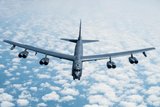
![USAF opens B-52 upgrade to new companies as major programmes fall behind schedule]()
USAF opens B-52 upgrade to new companies as major programmes fall behind schedule
The US Air Force is seeking additional contractors to support communications upgrades for the B-52, while multiple Stratofortress modernisation programmes continue to experience delays, cost growth and technical challenges.
-
![July drone digest: Sovereign production takes centre stage at Farnborough]()
July drone digest: Sovereign production takes centre stage at Farnborough
Farnborough International Airshow (FIA) 2026 revealed the growing scale of the UK’s uncrewed ambitions, with companies showcasing new CCA, autonomous wingmen and surveillance drones, while sovereign production emerged as a key factor for multiple programmes.
-
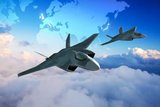
![July air forces review: Farnborough steals the headlines as programmes develop]()
July air forces review: Farnborough steals the headlines as programmes develop
The biannual Farnborough International Airshow 2026 was the backdrop in July for scores of deals, partnerships and announcements, including developments in the multinational next-generation Global Combat Air Programme and the UK’s $486 million trainer aircraft requirement.