Aero Vodochody and Saab sign deal to develop commonality between L-39NG and Gripen
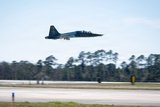
The Hungarian Air Force operates 14 Gripen JAS-39 fighters aircraft. (Photo: Saab)
In April 2022, the Hungarian government’s commissioner for defence development, Gáspár Maróth, announced the procurement of 12 L-39NGs. The contracts have reportedly been signed and the first aircraft were expected be delivered in 2024.


Saab Aerospace and Aero Vodochody have signed a Memorandum of Understanding to look at the adaptation of the Czech company’s L-39NG trainer/light attack aircraft to create greater commonality with Gripen JAS 39 multirole fighter aircraft. The companies will keep an eye on Hungary which operates Gripens and is buying L-39NG.
The work will look at the feasibility of aligning the two aircraft and explore the possible adaptation of L-39NG to meet the needs of the Hungarian Air Force.
The companies said the primary objective of the cooperation, where Saab has the role of subcontractor to Aero, was to conduct a feasibility study for a modification of the L-39NG aircraft to enable Hungarian pilot training from basic to advanced training.
“The results of the first phase of the collaboration will be subsequently used for a comprehensive joint study aimed at developing a new pilot interface and avionics system for the L-39NG aircraft to make it compatible with the Hungarian JAS 39 Gripen fighter aircraft,” the companies said.
The two companies have previously worked together. In 2008, they entered into a collaboration on the L-159 combat and training system and, in 2009, Aero began supplying the JAS 39 Gripen aircraft with pylons used to carry various weapon systems or fuel tanks.
In 2011, the cooperation continued with the production of three more types of pylons, which were fully assembled and tested at Aero.
Related Equipment in Defence Insight


More from Air Warfare
-
![July drone digest: Sovereign production takes centre stage at Farnborough]()
July drone digest: Sovereign production takes centre stage at Farnborough
Farnborough International Airshow (FIA) 2026 revealed the growing scale of the UK’s uncrewed ambitions, with companies showcasing new CCA, autonomous wingmen and surveillance drones, while sovereign production emerged as a key factor for multiple programmes.
-
![FIA 2026: Bell highlights MOSA-driven growth path for MV-75 Cheyenne]()
FIA 2026: Bell highlights MOSA-driven growth path for MV-75 Cheyenne
Bell Flight’s modular open-systems approach for the US Army’s MV-75 Cheyenne could open doors for international allies and suppliers once locked out by closed rotorcraft architectures.
-
![Maximise survivability with advanced electronic warfare (video)]()
Maximise survivability with advanced electronic warfare (video)
BAE Systems’ all-digital EW delivers 360-degree threat awareness in contested environments, boosts survivability, and cuts lifecycle costs.
-
![US Air Force seeks avionics upgrades for ageing T-38 Talon as T-7A Red Hawk delays persist]()
US Air Force seeks avionics upgrades for ageing T-38 Talon as T-7A Red Hawk delays persist
The USAF is looking for commercial avionics solutions to improve the T-38 Talon’s reliability, readiness and flight safety as continued T-7A Red Hawk delays increase the likelihood that the legacy trainer will remain in service longer than planned.
-
![British Army’s Project Corvus selection highlights new era of drone sovereignty]()
British Army’s Project Corvus selection highlights new era of drone sovereignty
The UK’s choice of the Tekever AR5 for Project Corvus reflects a wider shift in military drone procurement towards solutions that centre on sovereignty and domestic production, moving away from overseas reliance.