Advances in HALE/MALE systems prove the sky is not the limit for drones
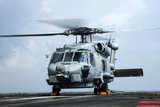
The PHASA-35 exceeds altitudes of 66,000 feet when in flight. (Photo: BAE Systems)
Drone systems are multiplying at high altitudes as designers turn out new components and subsystems that let units operate there.


Threat detection and reaction times have never been more important on the battlefield and fleets of high-flying, long-lasting uncrewed aerial vehicle (UAV) units provide a critical early warning and communications network for modern-day militaries.
For today’s defence industry, client interest in expanding high- and medium-altitude, long-endurance (HALE/MALE) drone fleets is only growing stronger as competition between different geopolitical blocs heats up. The result has been a burst of new releases and industry collaboration as companies team up to benefit from one another’s strengths in different fields of expertise in this highly complex area.
Threat detection upgrades
In June, US-headquartered General Atomics
Our news & analysis is now part of Defence Insight®
A Basic-level or higher Defence Insight subscription is now required to view this content.

More from Air Warfare
-
![V-22 Osprey safety upgrade moves towards wider fleet installation under $35.5 million deal]()
V-22 Osprey safety upgrade moves towards wider fleet installation under $35.5 million deal
Bell Boeing will supply 73 additional ODSSHI kits as NAVAIR prepares to introduce predictive drive-system monitoring across US and Japanese V-22 fleets.
-
![Europe risks losing control of CUAS production capacity as manufacturers look abroad]()
Europe risks losing control of CUAS production capacity as manufacturers look abroad
European counter-drone developers are securing early orders in the Middle East while slow domestic acquisition processes threaten to redirect production capacity, expertise and investment away from Europe.
-
![India’s rotary-wing capability gap grows as IMRH programme delays persist]()
India’s rotary-wing capability gap grows as IMRH programme delays persist
With IMRH and DBMRH potentially years from service, India faces a widening rotary-wing capability gap that could drive further foreign purchases even as HAL and Safran build the foundations of an indigenous successor.
-
![AFA 2026: Swarm Aero eyes 2027 Gamera flight as Textron/Merlin reveal SkyCourier UX]()
AFA 2026: Swarm Aero eyes 2027 Gamera flight as Textron/Merlin reveal SkyCourier UX
Two new uncrewed aircraft concepts target very different US military requirements, from massed long-range strike to autonomous logistics. Shephard spoke with executives from Swarm Aero, Textron Aviation and Merlin Labs at this year's AFA Air, Space & Cyber conference to learn more about their capabilities.