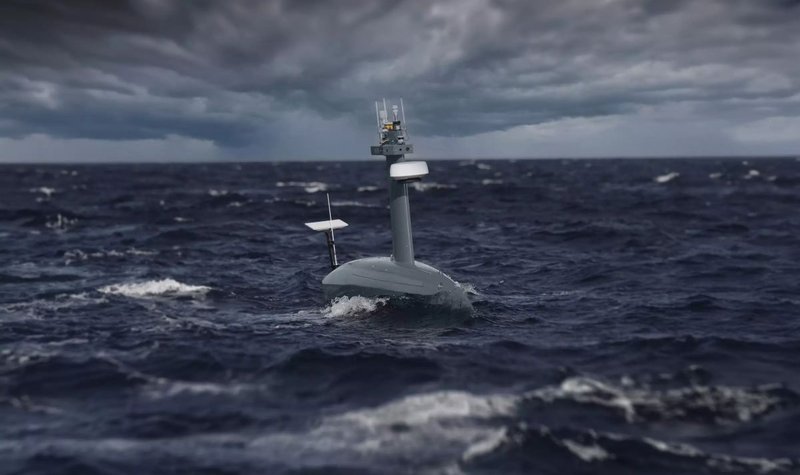
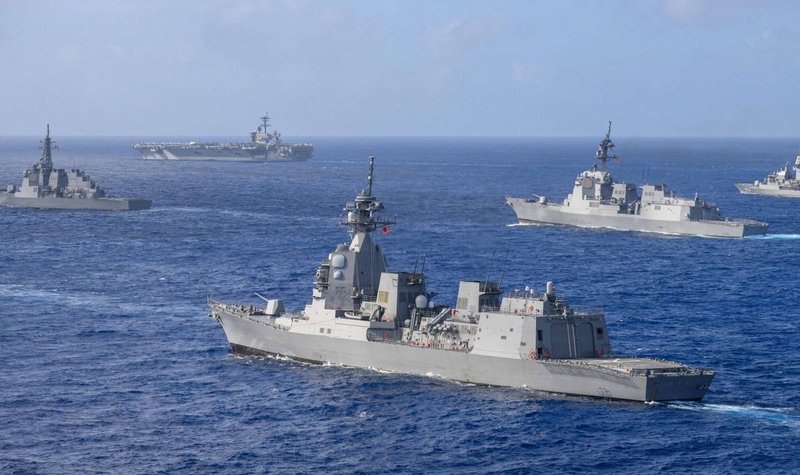
In October 2026, the US Navy sent an uncrewed surface vessel to sea with a carrier strike group for the first time. It is a step forward for hybrid operations, but it raises an awkward question: what happens to the drones if the ship controlling them is lost?
Uncrewed ground vehicles have been put on show featuring weapons ranging from machine guns to rockets since the turn of century, but the Russo-Ukrainian War has seen them take to the battlefield. At the same time, the US Marine Corps coastal defence system is heading for full rate production.
Vanilla Aircraft's VA001 UAS has successfully completed an unmanned internal combustion powered flight that lasted for five days, one hour and 24 minutes, the company …
Rockwell Collins has received a contract from the US Air Force Lifecycle Management Center (AFLCMC) to provide maintenance and sustainment of KC-10 avionics systems and …
The US Army’s Kestrel Eye microsatellite prototype was deployed into space from the International Space Station (ISS) and activated on 24 October. The microsatellite was …
Thales is analysing logged data from the recent Formidable Shield ballistic missile defence (BMD) exercise to see if modifications made to its SMART-L Multi Mission (MM) radar can …
Aechelon Technology has been contracted by Veraxx Engineering to provide nine image generators for the US Marine Corps' MV-22 training devices, the company announced on …
The Royal Malaysian Navy (RMN) formalised the relocation of its Region 2 Command from Kota Kinabalu to Sandakan on 17 October. The relocation actually began …
Satisfied with the performance of a prototype Phantom 380-X 4x4 APC deployed by the Royal Thai Marine Corps (RTMC) in the country’s troubled southern border …
The Malaysian government has given the go-ahead for the Royal Malaysian Air Force (RMAF) to purchase four maritime patrol aircraft and the Malaysian Army to …