Curtiss-Wright controls wins Lockheed Martin contract
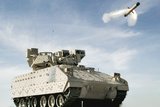
Curtiss-Wright Corporation today announced that it has received a contract from Lockheed Martin to provide the turret drive servo system for use in the UK’s new Scout reconnaissance vehicle. Curtiss-Wright’s turret drive servo system provides weapon stabilization for tracked combat vehicles.
“Curtiss-Wright is proud to provide our industry leading military vehicle rugged drive system for application in the UK Ministry of Defence’s Scout vehicle,” said David Adams, co-chief operating officer of Curtiss-Wright Corporation.
Curtiss-Wright will design, develop and manufacture the turret drive servo system at the company’s Motion Control facility in Neuhausen, Switzerland. The contract, which is for the demonstration phase of the program with an option for production deliveries, continues through December 2013.
The Scout vehicle is a new medium-weight armored reconnaissance ground vehicle designed for deployment on rapid intervention, enduring peacekeeping and peace enforcement operations and for support to high intensity, major combat operations. Lockheed Martin UK has been awarded the contract from General Dynamics UK to deliver the turret for the Scout reconnaissance vehicle, which will replace the British Army’s Scimitar vehicle.
Source: Curtiss-Wright Controls





More from Land Warfare
-
![AUSA 2026: companies adapt munitions and missiles for greater effect at lower costs]()
AUSA 2026: companies adapt munitions and missiles for greater effect at lower costs
Rather than developing entirely new weapons, defence companies are looking to build on existing weapons and systems to deliver greater capability, control costs and accelerate fielding.
-
![With changing patterns in Middle Eastern procurement, is Europe missing out?]()
With changing patterns in Middle Eastern procurement, is Europe missing out?
Traditional suppliers are struggling to meet the Middle East’s armoured vehicle modernisation needs, creating opportunities for South Korean manufacturers and regional defence industries.
-
![AUSA 2026: CUAS market expands as suppliers target new threats and operational requirements]()
AUSA 2026: CUAS market expands as suppliers target new threats and operational requirements
New developments from MARSS, MyDefence, Mountain Horse Solutions and Rafael suggest that future counter-drone protection will increasingly depend on combining advanced detection, rapid interception and integrated defensive networks.