USN picks Progeny Systems for torpedo support
Company will work on MK 54 Mod 1 and MK 48 programmes


Software and hardware integration specialist Progeny Systems is working to support the MK 54 Mod 1 Lightweight (LWT) and MK 48 Heavyweight torpedo programmes, under a $10.18 million contract modification from US Naval Sea Systems Command.
The vast majority (98%) of the work will be carried out Towcester, UK with the rest conducted at two sites in the US.
Shephard Defence Insight notes that the MK 54 Mod 1 LWT upgrade kit from Raytheon adds a new sonar array assembly and improved processing. The MK 54 ASW torpedo is compatible with more than 20 launch platforms and it is in use with the Australian, Brazilian and Indian navies as well as the USN.
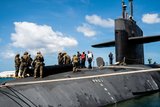
The MK 48 torpedo from Lockheed Martin equips six navies worldwide. The latest variant is Mod 7 (pictured).
As part of our promise to deliver comprehensive coverage to our Defence Insight and Premium News subscribers, our curated defence news content provides the latest industry updates, contract awards and programme milestones
Related Equipment in Defence Insight

More from Naval Warfare
-
![US turns to allies to tackle navy shipbuilding backlog]()
US turns to allies to tackle navy shipbuilding backlog
A White House memorandum acknowledges US Navy shipbuilding backlogs and a weakened industrial base, opening a formal path for South Korean and Japanese yards to help rebuild capacity.
-
![US Navy’s $275 billion BBGN plan hinges on shipyard transformation]()
US Navy’s $275 billion BBGN plan hinges on shipyard transformation
The US Navy’s planned nuclear-powered warship carries a US$275 billion price tag, but the greater story lies in the industrial overhaul needed to build it, from AI-enabled design to digital twins and modular construction.
-
![Industry sees opportunity in Australia’s shift to networked undersea warfare]()
Industry sees opportunity in Australia’s shift to networked undersea warfare
Australia’s new defence innovation strategy indicates a shift from platform-centric to network-centric undersea warfare, with Ocius and Anduril Industries pointing to fast-growing opportunities for local industry.
-
![Asia-Pacific emerges as the largest export market for US-made USVs]()
Asia-Pacific emerges as the largest export market for US-made USVs
Asian customers have placed one of the largest known international purchases of US-built uncrewed surface vessels, highlighting accelerating regional demand for autonomous maritime capabilities and distributed naval operations.