US Navy accepts DART mission system


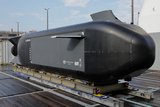
The US Navy has received the Raytheon-developed Dual-mode Array Transmitter (DART) mission system following the completion of rigorous acceptance testing at the Harbor Branch Oceanographic Institute, NAVSEA announced on 4 December.
The DART mission system is the final component of the Littoral Combat Ship (LCS) anti-submarine warfare (ASW) mission package. The DART mission system and ASW mission package will provide the US Navy with the ability to manoeuvre active and passive sonars above and below the thermocline layer.
Following acceptance of the DART pre-production test article, the navy plans to embark the system on a craft of opportunity and proceed to the Atlantic Undersea Test and Evaluation Center for an in-water demonstration of the of the LCS ASW mission package’s Escort Mission Module prior to formal developmental testing on USS Fort Worth.

More from Naval Warfare
-
![US turns to allies to tackle navy shipbuilding backlog]()
US turns to allies to tackle navy shipbuilding backlog
A White House memorandum acknowledges US Navy shipbuilding backlogs and a weakened industrial base, opening a formal path for South Korean and Japanese yards to help rebuild capacity.
-
![US Navy’s $275 billion BBGN plan hinges on shipyard transformation]()
US Navy’s $275 billion BBGN plan hinges on shipyard transformation
The US Navy’s planned nuclear-powered warship carries a US$275 billion price tag, but the greater story lies in the industrial overhaul needed to build it, from AI-enabled design to digital twins and modular construction.
-
![Industry sees opportunity in Australia’s shift to networked undersea warfare]()
Industry sees opportunity in Australia’s shift to networked undersea warfare
Australia’s new defence innovation strategy indicates a shift from platform-centric to network-centric undersea warfare, with Ocius and Anduril Industries pointing to fast-growing opportunities for local industry.