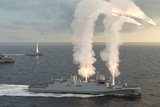
US approves sale of patrol vessels to Jordan


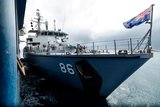
The US State Department approved a possible foreign military sale of 35m coastal patrol boats to Jordan for an estimated $80 million.
The Defense Security Cooperation Agency announced the approval on 17 March and the contract will include associated equipment, parts, training and logistical support .
Jordan requested a possible sale of two coastal patrol boats with two MSI Defence Systems Seahawk A2 DS30M-30mm Gun Weapon Systems. It had also requested MK44 Bushmaster Cannons, 1,140 rounds of 30mm target-practice-tracer ammunition, 4,020 rounds of 30mm high-explosive incendiary with tracer ammunition and 60 rounds of 30mm inert dummy ammunition and two chaff systems.
In addition, it requested spare and repair parts, support equipment, publications and technical documentation, personnel training and training equipment, US government and contractor engineering, technical and logistics support services, and other related logistical and program support elements.
The principle contractor for this proposed sale has not yet been determined, and there are no known offset agreements proposed in connection with the sale.

You may also like

More from Naval Warfare
-
![How France’s SNLE 3G programme is reshaping the naval nuclear industrial base]()
How France’s SNLE 3G programme is reshaping the naval nuclear industrial base
Extending far beyond a four-submarine replacement programme, France’s ballistic missile submarine effort is a decades-long industrial effort designed to preserve the country’s ability to build and sustain nuclear-powered strategic platforms.
-
![China’s mineral processing dominance exposes naval supply chain vulnerabilities]()
China’s mineral processing dominance exposes naval supply chain vulnerabilities
Competition for critical minerals, and China’s dominance of their processing, is emerging as a decisive factor in future naval procurement programmes.
-
![Suppliers await next step in Australia’s mine warfare transition]()
Suppliers await next step in Australia’s mine warfare transition
Australia’s mine countermeasure capability remains in flux as the Huon-class nears retirement, but accelerated investment in autonomous systems is opening a path for industry.
-
![Can the US Navy ask Indo-Pacific allies to do more while training with them less?]()
Can the US Navy ask Indo-Pacific allies to do more while training with them less?
As the Iran War draws US ships and marine corps units away from the Indo-Pacific, curtailed exercises and a temporary carrier gap are exposing tensions between Washington’s demand for more self-reliant allies and the joint training needed to realise that ambition.
-
![How could Rheinmetall’s GMF 140 fit with ongoing programmes in North America?]()
How could Rheinmetall’s GMF 140 fit with ongoing programmes in North America?
With Canada committed to its River-class replacement and the USN pursuing a lower-cost frigate, Rheinmetall will need to demonstrate where the GMF 140 can fill a capability gap in the North American fleet.