ThayerMahan wins Office of Naval Research contract to expand capability of autonomous USV
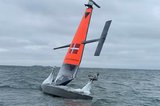
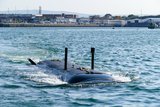
Outpost USV will form the basis of development work being carried out by ThayerMahan. (Photo: ThayerMahan)
The company has proven success in undersea operations but has been pushing to improve capability and further demonstrate its systems’ ability to provide surveillance.


US company ThayerMahan has been awarded $19.2 million by the US Office of Naval Research to continue with development of systems for underwater and seabed surveillance.
The contract was awarded in October under the heading ‘Autonomous Mobile Maritime Systems for Tactical Surveillance, Undersea Warfare, and Subsea and Seabed Warfare’. The description of awarded contract stated it was for the development of ‘specialised long-endurance autonomous platforms, sensors, autonomous behaviours, signal processors, artificial intelligence (AI) and machine learning techniques, and improved endurance capacity’.
The company has six major products, with its main focus on Outpost, an autonomous maritime sensing system that can be deployed in
Our news & analysis is now part of Defence Insight®
A Basic-level or higher Defence Insight subscription is now required to view this content.

More from Naval Warfare
-
![Denmark’s air defence frigate requirement draws growing European competition]()
Denmark’s air defence frigate requirement draws growing European competition
With no formal competition under way, industrial partnerships, production capacity and air defence capability could all shape the programme as Denmark considers how to replace its three Iver Huitfeldt-class frigates.
-
![Singapore expands maritime presence with future-ready Sentinel OPV]()
Singapore expands maritime presence with future-ready Sentinel OPV
Singapore is building space for uncrewed systems and future technologies into its new Sentinel-class OPVs, reflecting a wider move towards adaptable vessels capable of maintaining persistent maritime presence.
-
![Israeli Navy looks to expand as war reshapes future force requirements]()
Israeli Navy looks to expand as war reshapes future force requirements
Israel’s navy is preparing for a larger and more technically diverse role, but its ambitions could be impacted by supply chain restrictions, accelerating demand for domestic naval production as well as autonomous maritime capabilities.