Sweden buys new amphibious artillery platforms
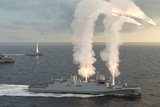
The 24mm Fast Mortar has already been procured by the UAE. (Photo: Swede Ship Marine)
The Swedish Defence Materiel Administration (FMV) has contracted Swede Ship Marine for eight naval artillery platforms for use by the country’s amphibious forces.


The new vessels will give Swedish forces the ability to conduct indirect fires from the sea when delivered from 2027 to 2028.
Sweden will receive training systems slightly earlier in 2026 to 2027.
FMV project manager Lennart Klingenstierna said with Sweden’s unique archipelagic environment littered with islands and obstructed visibility, the capability was a ‘powerful addition to fighting the enemy’.
The vessels are part of Sweden’s Amfbat 2030 programme, which seeks to transform the concept of operations for the Scandinavian country’s amphibious forces.
Designed and built by Swede Ship, the 24m Fast Mortar is a patrol boat based on the
Our news & analysis is now part of Defence Insight®
A Basic-level or higher Defence Insight subscription is now required to view this content.



More from Naval Warfare
-
![Can the US Navy ask Indo-Pacific allies to do more while training with them less?]()
Can the US Navy ask Indo-Pacific allies to do more while training with them less?
As the Iran War draws US ships and marine corps units away from the Indo-Pacific, curtailed exercises and a temporary carrier gap are exposing tensions between Washington’s demand for more self-reliant allies and the joint training needed to realise that ambition.
-
![How could Rheinmetall’s GMF 140 fit with ongoing programmes in North America?]()
How could Rheinmetall’s GMF 140 fit with ongoing programmes in North America?
With Canada committed to its River-class replacement and the USN pursuing a lower-cost frigate, Rheinmetall will need to demonstrate where the GMF 140 can fill a capability gap in the North American fleet.
-
![Australian industry programme builds pipeline for Virginia-class sustainment]()
Australian industry programme builds pipeline for Virginia-class sustainment
Australian businesses can now bid to support Virginia-class submarine sustainment in Western Australia, as momentum around the Henderson Defence Precinct also builds.
-
![South Korea, Japan and Turkey vie for US shipbuilding access in future frigate contest]()
South Korea, Japan and Turkey vie for US shipbuilding access in future frigate contest
Washington’s search for a foreign-built frigate could hand South Korea, Japan and Turkey a larger prize than a double-hull order: a foothold inside the US shipbuilding industrial base.
-
![Japan’s FY2027 budget bets on stand-off systems to offset demographic decline]()
Japan’s FY2027 budget bets on stand-off systems to offset demographic decline
Japan’s FY2027 defence budget backs stand-off strike, a 17-aircraft MQ-9B buy and a declared bid to lead the world in uncrewed maritime assets, alongside new frigates, submarines and support ships.