Russia’s Volkhov submarine begins dockside trials


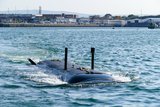
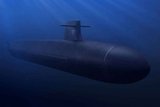
The Admiralty Shipyard begun dockside trials of the Project 636.3 diesel-electric Volkhov submarine (known as Improved Kilo-II by NATO) at its base in St Petersburg.
The submarine is the second in a total order of six which the shipyard has been contracted to build for Russia’s Pacific Fleet. Two other vessels are under construction and are due to be completed in 2022.
The Admiralty Shipyard released a statement saying that: ‘The trials will take about three months. Over this period, specialists will check all the ship’s systems, assembles and mechanisms.’
TASS reported that the submarines are armed with 3M-54 Kalibr cruise missiles which can be launched from the vessel’s torpedo tubes whilst in a submerged position.
Related Equipment in Defence Insight




More from Naval Warfare
-
![Quantum sensing gathers pace as navies eye undersea advantage]()
Quantum sensing gathers pace as navies eye undersea advantage
As AI dominates defence conversations, industry increasingly points to quantum sensing as the technology set to change submarine and uncrewed underwater vehicle operations.
-
![Competitive P17B tender marks a shift in Indian Navy frigate procurement]()
Competitive P17B tender marks a shift in Indian Navy frigate procurement
The Indian Navy's P17B programme is expected to combine greater weapons capacity with a competitive domestic construction model, although key systems could remain dependent on international supply chains.
-
![How France’s SNLE 3G programme is reshaping the naval nuclear industrial base]()
How France’s SNLE 3G programme is reshaping the naval nuclear industrial base
Extending far beyond a four-submarine replacement programme, France’s ballistic missile submarine effort is a decades-long industrial initiative designed to preserve the country’s ability to build and sustain nuclear-powered strategic platforms.
-
![Quantum Systems enters maritime domain with Baltic-focused USV and UUV]()
Quantum Systems enters maritime domain with Baltic-focused USV and UUV
Quantum Systems has launched into the maritime domain with Seavex and Subvex, aiming to close a Baltic Sea ISR gap opened by infrastructure sabotage.
-
![Suppliers await next step in Australia’s mine warfare transition]()
Suppliers await next step in Australia’s mine warfare transition
Australia’s mine countermeasure capability remains in flux as the Huon-class nears retirement, but accelerated investment in autonomous systems is opening a path for industry.