Raytheon obtains SSBN research contract
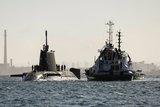
Raytheon is conducting research for the ONR on novel non-acoustic phenomenologies in SSBN operations (pictured is USS Nebraska). (Photo: USN/Seaman Joseph Weiser)
Raytheon Missiles & Defense is to work on a three-year contract worth $9.51 million from the USN Office of Naval Research (ONR) to explore ‘scientific investigations of novel non-acoustic phenomenologies associated with SSBN [nuclear-powered ballistic missile submarine] security and submarines in general’, the DoD announced on 10 August.
Physics-based analysis in the Science and Technology Research for the SSBN Security Technology Program, also known as Oban 3, will include the development of new products in signature modelling and validation, clutter modelling and validation, signal processing algorithm development and countermeasure concept development.
Raytheon won the contract after a competitive process under a Long Range Broad Agency Announcement for Navy and Marine Corps Science & Technology.
More from Naval Warfare
-
NATO tests use of “undetectable, jam-proof” laser communication in maritime scenarios
As part of its effort to better prepare its capabilities for operations in contested and congested scenarios, NATO evaluated a Lithuanian ship-to-ship terminal designed to not be susceptible to enemy interference.
-
Future of the Canadian Patrol Submarine Project is still unclear
The Canadian government remains tight-lipped on the timeline and funding required for the next steps of its Canadian Submarine Patrol Project, which should offer improved capabilities for the country’s navy.
-
Mitsubishi eyes future with Australia’s Mogami selection
With Australia’s selection of the Mogami-class for Project Sea 3000, Mitsubishi is investigating local production in the next decade as potential export opportunities emerge.
-
Thales’ new Sonar 76Nano could equip UK Royal Navy on anti-submarine warfare missions
The new sonar is designed to equip uncrewed underwater vessels, with the potential to be used by the Royal Navy for its Atlantic Bastion and Atlantic Net missions.