BAE Systems commits to Aussie steel


BAE Systems Australia will source steel from two Australian companies should it be successful in its bid for the Royal Australian Navy’s SEA 5000 programme.
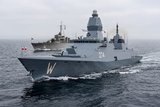
The company is competing to build nine Future Frigates as part of the programme. Its proposal is based on a variant of the Type 26 vessel, which it calls the Global Combat Ship-Australia.
In order to construct the vessels, BAE Systems will partner with BlueScope and Liberty OneSteel for the supply of more than 48,000 tonnes of Australian steel.
BlueScope will potentially supply plate steel that will be manufactured at its facility in Port Kembla, NSW.
Liberty OneSteel will provide structural steel sections for the frigates from its Whyalla facility. It will also deliver products for 4,000 tonnes of structural steel for the shipbuilding infrastructure, which includes cradles and other fixtures. Liberty OneSteel will also have the opportunity to offer value added processing, fabrication and welding in the Whyalla supply chain.
BAE Systems Australia chief executive, Gabby Costigan, said: ‘For SEA 5000 we are committed to building the Future Frigates in Australia using Australian suppliers at every opportunity. This includes maximising the
use of Australian steel on the programme. We are proud to support the Australian steel industry throughout our business and will grow that support if we are successful on SEA 5000.’


More from Naval Warfare
-
![Autonomy gives Turkey a chance to outflank established naval shipbuilders]()
Autonomy gives Turkey a chance to outflank established naval shipbuilders
Turkish shipbuilders have sold ships from Asia to Europe, but autonomy and swarm technology could give them a fairer fight against Western European rivals.
-
![Canada assesses security equipment changes for Polar Icebreaker Imnaryuaq]()
Canada assesses security equipment changes for Polar Icebreaker Imnaryuaq
The Canadian Department of National Defence is evaluating communications and reconnaissance changes for CCGS Imnaryuaq’s expanded maritime security role, while retaining its 2032 acceptance target.
-
![US Navy’s MQ-25 Stingray approaches carrier-integration tests]()
US Navy’s MQ-25 Stingray approaches carrier-integration tests
Boeing has outlined its upcoming precision-landing and carrier-airspace trials as MQ-25 manufacturing shifts towards Illinois, with initial Lot 1 deliveries expected in 2029.
-
![From Poland to the Pacific: can Miecznik become a blueprint for other navies?]()
From Poland to the Pacific: can Miecznik become a blueprint for other navies?
Babcock is taking its Polish industrial partnership approach to Denmark and New Zealand as navies seek sovereign shipbuilding skills alongside ships.