Philippine Navy obtains its first ever missiles


This week the Philippine Navy (PN) received a shipment of Spike-ER missiles, Typhoon MLS-ER launchers and Mini Typhoon 12.7mm RWSs from Rafael in Israel, destined for installation aboard three Multi-Purpose Attack Craft (MPAC).
Notable is the fact that these are the first ever missiles to enter the PN’s inventory, marking the navy’s late entry into the missile age. They were purchased via a government-to-government sale.
The Typhoon MLS-ER contains four ready-to-launch Spike missiles, with spares stored on the vessel. The fire-and-forget Spike-ER has a listed range of 400m-8km and can penetrate 1m of rolled homogeneous steel.
The PN had earlier
Our news & analysis is now part of Defence Insight®
A Basic-level or higher Defence Insight subscription is now required to view this content.


More from Naval Warfare
-
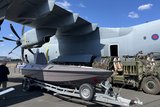
![A400M trial demonstrates airborne deployment of uncrewed surface vessel]()
A400M trial demonstrates airborne deployment of uncrewed surface vessel
Kraken Technology Group’s A400M airdrop of a K3 Scout uncrewed surface vessel points to a new way for navies to insert USVs into contested waters, bypassing ports and motherships.
-
![From the seas to the web: the changing shape of UK defence in Southeast Asia]()
From the seas to the web: the changing shape of UK defence in Southeast Asia
As his final engagement before leaving his post as the head of the British defence staff for Southeast Asia and defence adviser to Singapore, Brigadier Eddie Maskell-Pedersen spoke with Shephard about maritime security, cyber cooperation and long-term partnerships.
-
![Naval primes dive into an underwater acquisition gold rush]()
Naval primes dive into an underwater acquisition gold rush
A cluster of acquisitions by Fincantieri, Thales, Lockheed Martin and Rheinmetall points to a race to secure underwater warfare, autonomy and sensing capability.
-
![Baltic naval priorities shift towards mine warfare and versatile platforms]()
Baltic naval priorities shift towards mine warfare and versatile platforms
Baltic states are investing in mine warfare, uncrewed systems and multirole platforms as major warship purchases remain scarce, industry sources indicate.