McKean supports USN Future Surface Combatant
McKean Defense leads team to provide hull, electrical, mechanical and other services for Future Surface Combatant.


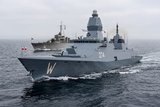
Hull, mechanical and electrical controls in the USN Future Surface Combatant programme will be supported by a team led by McKean Defense Group, under a $20.1 million contract from Naval Surface Warfare Center Philadelphia Division (NSWCPD).
The five-year deal, announced by McKean Defense on 16 March, covers machinery, electric plant, propulsion, auxiliary, damage control, and ship control system programmes.
Work also includes navigation, interior communications domain networks, condition based monitoring, voyage data recorders, and digital video surveillance system engineering.
Joseph Carlini, CEO of McKean Defense, said the company has assembled a team ‘ready to support the complex Future Surface Combatant design solutions’ which are essential for the future US programme.
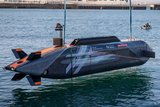
Potential solutions for Future Surface Combatant include large or medium-sized USVs.
As part of our promise to deliver comprehensive coverage to our Defence Insight and Premium News subscribers, our curated defence news content provides the latest industry updates, contract awards and programme milestones.



More from Naval Warfare
-
![Autonomy gives Turkey a chance to outflank established naval shipbuilders]()
Autonomy gives Turkey a chance to outflank established naval shipbuilders
Turkish shipbuilders have sold ships from Asia to Europe, but autonomy and swarm technology could give them a fairer fight against Western European rivals.
-
![Canada assesses security equipment changes for Polar Icebreaker Imnaryuaq]()
Canada assesses security equipment changes for Polar Icebreaker Imnaryuaq
The Canadian Department of National Defence is evaluating communications and reconnaissance changes for CCGS Imnaryuaq’s expanded maritime security role, while retaining its 2032 acceptance target.
-
![All eyes on Royal Navy’s Type 93 market engagement as industry prepares bids]()
All eyes on Royal Navy’s Type 93 market engagement as industry prepares bids
Responses are due by 29 October as the Royal Navy tests the market, with BAE Systems’ Herne and MSubs’ Excalibur setting up a contest where payloads may decide the winner.
-
![US Navy’s MQ-25 Stingray approaches carrier-integration tests]()
US Navy’s MQ-25 Stingray approaches carrier-integration tests
Boeing has outlined its upcoming precision-landing and carrier-airspace trials as MQ-25 manufacturing shifts towards Illinois, with initial Lot 1 deliveries expected in 2029.
-
![From Poland to the Pacific: can Miecznik become a blueprint for other navies?]()
From Poland to the Pacific: can Miecznik become a blueprint for other navies?
Babcock is taking its Polish industrial partnership approach to Denmark and New Zealand as navies seek sovereign shipbuilding skills alongside ships.