Japan works on new OPV design and pushes for exports
The Japanese Acquisition, Technology & Logistics Agency released video footage of its planned next-generation OPV. (Photo: ATLA)
A new OPV design is one item for sale as Japan pushes hard to increase defence equipment exports. (ATLA)


On 1 July the Acquisition, Technology & Logistics Agency (ATLA) in the Japenese MoD released a publicity video showcasing domestic equipment available for export. Among the products available was a concept for a new OPV under design for the Japan Maritime Self-Defense Force (JMSDF).
The new OPV will be characterised by automation, adaptability, modularity and sustainability.
The video commentary stated: ‘Plans are now under way to develop next-generation offshore patrol vessels. They will achieve outstanding surveillance capabilities.’ Computer imagery showed a design with an integrated mast and stealthy silhouette.
Furthermore, the future OPV will have a smaller crew (expected to
Our news & analysis is now part of Defence Insight®
A Basic-level or higher Defence Insight subscription is now required to view this content.



More from Naval Warfare
-
![Industrial teams prepare roadmap for Indonesia aircraft carrier transformation]()
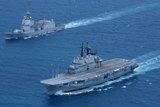
Industrial teams prepare roadmap for Indonesia aircraft carrier transformation
Fincantieri and PT PAL have agreed on a framework to modernise the former Giuseppe Garibaldi, with drones, communications and broader Italian–Indonesian industrial ties involved.
-
![Singapore expands maritime presence with future-ready Sentinel OPV]()
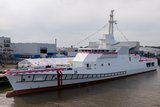
Singapore expands maritime presence with future-ready Sentinel OPV
Singapore is building space for uncrewed systems and future technologies into its new Sentinel-class OPVs, reflecting a wider move towards adaptable vessels capable of maintaining persistent maritime presence.
-
![From the Baltic to the Gulf: where USV procurement is heading next]()
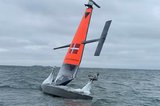
From the Baltic to the Gulf: where USV procurement is heading next
Saildrone’s new Copenhagen base is one sign of a larger shift, as navies globally turn to uncrewed vessels for surveillance and mine clearance.