HII names LPD 30 the USS Harrisburg
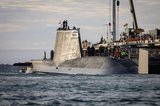
The USS Harrisburg at its launch in October 2024. (Photo: HII)
The naming of the Harrisburg moves the first Flight II San Antonio-class vessel on towards active service.


Huntingdon Ingalls Industries (HII) “christened” the latest San Antonio-class amphibious transport dock that will become part of the US Navy (USN) fleet on January 11, 2024. The USS Harrisburg (otherwise known as the LPD 30) is the 14thSan Antonia-class vessel built by HII, and the first of the class’s Flight II.
The Harrisburg was launched in October 2024, but the ceremony to officially give it is name took it closer to its active service. It will be the first vessel in the Flight II iteration of the class.
Eventually, there are plans for Flight II to contain 13 vessels, mirroring Flight I, which was also built by HII.
Related Articles
US Navy commissions the last San Antonio-class Flight I vessel
HII launches new San Antonio-class vessel
San Antonio-class vessels have been designed and built to be extremely multi-mission capable, taking on a wide range of assignments including amphibious assault, special operations and expeditionary warfare missions.
They are also intended to be operationally flexible, so they can be deployed independently or as part of a larger strike group.
At its launch, the initial deployment of the Harrisburg was said to be in support of expeditionary warfare, humanitarian assistance and disaster relief missions.
To date, the San Antonio class has been notorious for the overspend in its delivery, which each of the 13 Flight I vessels costing US$1.6 billion, set against an original expectation of just an $890 million price tag.
The USS Harrisburg is expected to retain this overspend, but HII is understood to be aiming to reduce the unit cost of further Flight II vessels to $1.4 billion apiece.
Related Programmes in Defence Insight
San Antonio LPD 17 Flight II [USN]
Related Equipment in Defence Insight



More from Naval Warfare
-
![Five years on: where could opportunities emerge next for AUKUS Pillar II?]()
Five years on: where could opportunities emerge next for AUKUS Pillar II?
Payload commonality, combat systems and electronic warfare are emerging as likely priorities as the trilateral partnership balances building submarines with sharing industrial ecosystems.
-
![From the Baltic to the Gulf: where USV procurement is heading next]()
From the Baltic to the Gulf: where USV procurement is heading next
Saildrone’s new Copenhagen base is one sign of a larger shift, as navies globally turn to uncrewed vessels for surveillance and mine clearance.
-
![Israeli Navy looks to expand as war reshapes future force requirements]()
Israeli Navy looks to expand as war reshapes future force requirements
Israel’s navy is preparing for a larger and more technically diverse role, but its ambitions could be impacted by supply chain restrictions, accelerating demand for domestic naval production as well as autonomous maritime capabilities.