German yard is favourite to build Bulgarian patrol ships
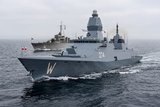
Germany-based Lürssen is set to be awarded a contract to supply two multifunctional modular patrol vessels to the Bulgarian Navy, following the recommendation of a government working group.
A statement on 27 February from the Bulgarian government noted that the bid from Lürssen falls within the financial limits of the project (BGN984 million, or $551 million).
Each vessel will be armed with a 76mm main gun, CIWS, anti-ship missiles, SAMs, and lightweight torpedoes. The ships will also include a 3D radar, Link 11 equipment, hull-mounted sonar, a baseline EW system and the capability to accommodate one AS565MB Panther helicopter.
The tender stipulates that at least one of the two ships shall be built in Bulgaria. According to the project schedule, the first hull should be launched in 2021 and the second in 2022.
Lürssen competed against Bulgarian shipbuilder MTG Delfin and Fincantieri.
As part of our promise to deliver comprehensive coverage to our Defence Insight and Premium News subscribers, our curated defence news content provides the latest industry updates, contract awards and programme milestones.
Related Equipment in Defence Insight





More from Naval Warfare
-
![Autonomy gives Turkey a chance to outflank established naval shipbuilders]()
Autonomy gives Turkey a chance to outflank established naval shipbuilders
Turkish shipbuilders have sold ships from Asia to Europe, but autonomy and swarm technology could give them a fairer fight against Western European rivals.
-
![Canada assesses security equipment changes for Polar Icebreaker Imnaryuaq]()
Canada assesses security equipment changes for Polar Icebreaker Imnaryuaq
The Canadian Department of National Defence is evaluating communications and reconnaissance changes for CCGS Imnaryuaq’s expanded maritime security role, while retaining its 2032 acceptance target.
-
![All eyes on Royal Navy’s Type 93 market engagement as industry prepares bids]()
All eyes on Royal Navy’s Type 93 market engagement as industry prepares bids
Responses are due by 29 October as the Royal Navy tests the market, with BAE Systems’ Herne and MSubs’ Excalibur setting up a contest where payloads may decide the winner.
-
![US Navy’s MQ-25 Stingray approaches carrier-integration tests]()
US Navy’s MQ-25 Stingray approaches carrier-integration tests
Boeing has outlined its upcoming precision-landing and carrier-airspace trials as MQ-25 manufacturing shifts towards Illinois, with initial Lot 1 deliveries expected in 2029.
-
![From Poland to the Pacific: can Miecznik become a blueprint for other navies?]()
From Poland to the Pacific: can Miecznik become a blueprint for other navies?
Babcock is taking its Polish industrial partnership approach to Denmark and New Zealand as navies seek sovereign shipbuilding skills alongside ships.