Finland issues tender for new minehunting vessels
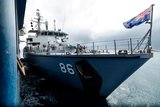
Kiiski-class ship clearing sea mines in 2018. (Photo: Finnish Navy)
Finland is looking for new vessels to replace its in-service Kiiski and Kuha-class vessels.


The Finnish Defence Forces Logistics Command has launched a tender to acquire a new minesweeping capability for the Finnish Navy.
According to the tender documents, the new minesweeping vessels should have autonomous and remotely controlled features and a maximum length of 24m.
The future vessels are required to sweet contact mines with mechanical sweeping gear, have enough deck space for mechanical sweep operations and be equipped with crew accommodation facilities.
An RfQ will be put out in Q2 2022, with plans to enter a negotiation phase in Q3 2022.
The value of the contract is estimated at between €18 million and €20 million ($20.58 million to $22.87 million).
The tender document adds the procurement contract will include options worth €15 million.
Related Programmes in Defence Insight

You may also like

More from Naval Warfare
-
![Suppliers await next step in Australia’s mine warfare transition]()
Suppliers await next step in Australia’s mine warfare transition
Australia’s mine countermeasure capability remains in flux as the Huon-class nears retirement, but accelerated investment in autonomous systems is opening a path for industry.
-
![Can the US Navy ask Indo-Pacific allies to do more while training with them less?]()
Can the US Navy ask Indo-Pacific allies to do more while training with them less?
As the Iran War draws US ships and marine corps units away from the Indo-Pacific, curtailed exercises and a temporary carrier gap are exposing tensions between Washington’s demand for more self-reliant allies and the joint training needed to realise that ambition.
-
![How could Rheinmetall’s GMF 140 fit with ongoing programmes in North America?]()
How could Rheinmetall’s GMF 140 fit with ongoing programmes in North America?
With Canada committed to its River-class replacement and the USN pursuing a lower-cost frigate, Rheinmetall will need to demonstrate where the GMF 140 can fill a capability gap in the North American fleet.
-
![Australian industry programme builds pipeline for Virginia-class sustainment]()
Australian industry programme builds pipeline for Virginia-class sustainment
Australian businesses can now bid to support Virginia-class submarine sustainment in Western Australia, as momentum around the Henderson Defence Precinct also builds.
-
![South Korea, Japan and Turkey vie for US shipbuilding access in future frigate contest]()
South Korea, Japan and Turkey vie for US shipbuilding access in future frigate contest
Washington’s search for a foreign-built frigate could hand South Korea, Japan and Turkey a larger prize than a double-hull order: a foothold inside the US shipbuilding industrial base.
-
![Japan’s FY2027 budget bets on stand-off systems to offset demographic decline]()
Japan’s FY2027 budget bets on stand-off systems to offset demographic decline
Japan’s FY2027 defence budget backs stand-off strike, a 17-aircraft MQ-9B buy and a declared bid to lead the world in uncrewed maritime assets, alongside new frigates, submarines and support ships.