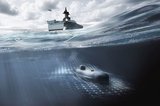
FC/ASW programme completes key review
MBDA has announced that the British-French Future Cruise/Anti-Ship Weapon (FC/ASW) programme has successfully completed its key review phase, jointly carried out by the UK’s Defence Equipment and Support and France’s defence procurement agency.
The current €100 million concept phase was initiated in 2017 for a duration of three years and is split 50/50 in terms of both quantity and quality of content between the UK and France. The effort will see MBDA mature systems and technologies that will increase the survivability, range and lethality of anti-ship and deep strike missiles launched by both air and naval combat platforms.
More in-depth studies will now be conducted with the aim of identifying the solutions that will be selected at the end of the concept phase in 2020 in order to respond to both nations’ requirements for long range anti-ship missions, suppression of enemy air defences and deep strike.
The conclusions of this study will help establish roadmaps for maturing the technologies required, and to launch any follow on assessment phase. This new phase will demonstrate the necessary maturity of the weapon system and its key components, to be followed by the development and production phase in the 2024 timeframe.
The FC/ASW intends to replace Storm Shadow/SCALP air launched cruise missile currently in service in the UK and France as well as Exocet anti-ship missile in France and Harpoon anti-ship missile in the UK.
Related Equipment in Defence Insight






More from Naval Warfare
-
![Israeli Navy looks to expand as war reshapes future force requirements]()
Israeli Navy looks to expand as war reshapes future force requirements
Israel’s navy is preparing for a larger and more technically diverse role, but its ambitions could be impacted by supply chain restrictions, accelerating demand for domestic naval production as well as autonomous maritime capabilities.
-
![Quantum sensing gathers pace as navies eye undersea advantage]()
Quantum sensing gathers pace as navies eye undersea advantage
As AI dominates defence conversations, industry increasingly points to quantum sensing as the technology set to change submarine and uncrewed underwater vehicle operations.
-
![Competitive P17B tender marks a shift in Indian Navy frigate procurement]()
Competitive P17B tender marks a shift in Indian Navy frigate procurement
The Indian Navy's P17B programme is expected to combine greater weapons capacity with a competitive domestic construction model, although key systems could remain dependent on international supply chains.
-
![How France’s SNLE 3G programme is reshaping the naval nuclear industrial base]()
How France’s SNLE 3G programme is reshaping the naval nuclear industrial base
Extending far beyond a four-submarine replacement programme, France’s ballistic missile submarine effort is a decades-long industrial initiative designed to preserve the country’s ability to build and sustain nuclear-powered strategic platforms.
-
![Quantum Systems enters maritime domain with Baltic-focused USV and UUV]()
Quantum Systems enters maritime domain with Baltic-focused USV and UUV
Quantum Systems has launched into the maritime domain with Seavex and Subvex, aiming to close a Baltic Sea ISR gap opened by infrastructure sabotage.