Europe plans progress on semi-autonomous modular naval vessel
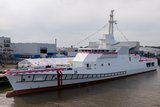
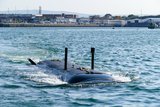
The project will attempt to develop a prototype semi-autonomous vessel by 2027. (Image: ECDI)
The pan-European project plans to develop a a new vessel architecture, create and test the physical prototype of the vessel by the end of 2027, and develop a data-centric autonomous ship architecture.


A European coalition has started work on a €95 million (US$103 million) four-year programme to develop a prototype semi-autonomous modular vessel which can be adapted for a range of missions.
The Estonian Centre for Defence Investments (ECDI) and Baltic WorkBoats will lead a pan-European project dubbed EUROGUARD (European Goal-based Multi-mission Autonomous Naval Reference Platform Development).
The project, one of the largest and best funded projects by the European Defence Fund (EDF), has involved 23 companies and research institutions from 10 EU countries, with member states led by the ECDI and the industrial consortium led by Baltic Workboats. A total of €30 million for the project will be funded by the countries and companies themselves.
The project has been divided into three phases: developing a new vessel architecture (GENSA), creating and testing the physical prototype of the vessel by the end of 2027, and developing a data-centric autonomous ship architecture.
Ats Janno, project office head at theECDI, said: “The prototype will certainly require further development, but the closer we get to a competitive and comprehensive result in military, technical, and economic terms, the more viable the project will be.”
In a previous EDF cooperation project, Integrated Modular Unmanned Ground System (iMUGS), Estonia led a €32.6 million project aimed at developing a standard solution for European unmanned ground systems.

More from Naval Warfare
-
![Denmark’s air defence frigate requirement draws growing European competition]()
Denmark’s air defence frigate requirement draws growing European competition
With no formal competition under way, industrial partnerships, production capacity and air defence capability could all shape the programme as Denmark considers how to replace its three Iver Huitfeldt-class frigates.
-
![Singapore expands maritime presence with future-ready Sentinel OPV]()
Singapore expands maritime presence with future-ready Sentinel OPV
Singapore is building space for uncrewed systems and future technologies into its new Sentinel-class OPVs, reflecting a wider move towards adaptable vessels capable of maintaining persistent maritime presence.
-
![Israeli Navy looks to expand as war reshapes future force requirements]()
Israeli Navy looks to expand as war reshapes future force requirements
Israel’s navy is preparing for a larger and more technically diverse role, but its ambitions could be impacted by supply chain restrictions, accelerating demand for domestic naval production as well as autonomous maritime capabilities.