DSA 2022: Indonesian shipyards keep up tempo of naval construction
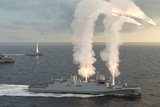
The Indonesian Navy commissioned its eighth landing ship tank on 8 March. It is seen here at its launch. (Photo: PT Daya Radar Utama)
Wherever possible, Indonesia is using local shipbuilders to build vessels for its disparate naval requirements.


The Indonesian Navy (TNI-AL) commissioned an additional LST of the Teluk Bintuni class in Bandar Lampung on 8 March.
The new 120m-long vessel is named KRI Telul Palu, with pennant number ‘523’. It is the eighth of nine LSTs built to replace older amphibious vessels, and the amphibious vessel is expected to be based in Lampung.
PT Daya Radar Utama constructed this ship, and a preceding one inducted on 12 July 2021. The final LST of a three-ship contract awarded in January 2017 should be finished this year.
Adm Yudo Morgono, Chief of the Indonesian Navy, said at the
Our news & analysis is now part of Defence Insight®
A Basic-level or higher Defence Insight subscription is now required to view this content.


More from Naval Warfare
-
![Can the US Navy ask Indo-Pacific allies to do more while training with them less?]()
Can the US Navy ask Indo-Pacific allies to do more while training with them less?
As the Iran War draws US ships and marine corps units away from the Indo-Pacific, curtailed exercises and a temporary carrier gap are exposing tensions between Washington’s demand for more self-reliant allies and the joint training needed to realise that ambition.
-
![How could Rheinmetall’s GMF 140 fit with ongoing programmes in North America?]()
How could Rheinmetall’s GMF 140 fit with ongoing programmes in North America?
With Canada committed to its River-class replacement and the USN pursuing a lower-cost frigate, Rheinmetall will need to demonstrate where the GMF 140 can fill a capability gap in the North American fleet.
-
![South Korea, Japan and Turkey vie for US shipbuilding access in future frigate contest]()
South Korea, Japan and Turkey vie for US shipbuilding access in future frigate contest
Washington’s search for a foreign-built frigate could hand South Korea, Japan and Turkey a larger prize than a double-hull order: a foothold inside the US shipbuilding industrial base.