Thales signs research collaboration MoU
A Memorandum of Understanding (MoU) has been signed between Flinders University in South Australia, ENSTA Bretagne and Thales that will see the organisations work together on advanced sonar and naval robotics technologies for Australia's future submarine programme.
ENSTA Bretagne is a graduate and post-graduate engineering school and research institute in Brest, France.
The MoU will open opportunities for closer collaboration with Thales research laboratories, and will provide a long term framework for collaboration in naval robotics applicable to both submarine and surface ship sonars including opportunities to share testing facilities, operate exchange programmes and facilitate joint research projects.
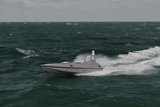
Two topics for research collaboration have been identified so far: one for the design of a demonstrator for the automatic connection of electro-optical links in a maritime environment and secondly for the development of USV test vehicles suitable to test autonomy algorithms on robotic swarms at sea.