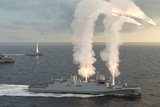
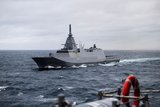
Águas Azuis consortium selected for Brazilian corvettes
The Águas Azuis consortium has been selected as preferred bidder by the Brazilian Navy for the construction of four vessels under the Tamandaré-class corvette (CCT) programme.
Led by Thyssenkrupp Marine Systems, the consortium also includes Embraer Defense & Security and Atech. The consortium will now form a specific purpose company for the implementation phase of the programme. The four corvettes are scheduled to be delivered between 2024 and 2028.
The new escort vessels will be used for the protection of maritime traffic and controlling the Brazilian jurisdictional waters and exclusive economic zone, totaling over 4.5 million sq km. The escort ships will also play an important role in peace and humanitarian aid missions.
The programme expects a transfer of technology (ToT) in naval engineering for military shipbuilding, combat and platform management systems.
The vessels will be built at CBO Group’s Oceana shipyard in Itajaí, Brazil. The shipyard will also act as the ToT receiver related to the project.
Under the project, Embraer’s Atech will provide combat management system and integrated platform management system for the Tamandaré Class corvettes and will receive ToT in cooperation with Atlas Elektronik, a Thyssenkrupp Marine Systems subsidiary, and L3 MAPPS. Embraer Defense & Security will integrate sensors and weaponry into the combat system.
The proposal submitted to the Brazilian Navy by the Águas Azuis consortium was based on the MEKO-class frigates.
Related Equipment in Defence Insight





More from Naval Warfare
-
![Suppliers await next step in Australia’s mine warfare transition]()
Suppliers await next step in Australia’s mine warfare transition
Australia’s mine countermeasure capability remains in flux as the Huon-class nears retirement, but accelerated investment in autonomous systems is opening a path for industry.
-
![Can the US Navy ask Indo-Pacific allies to do more while training with them less?]()
Can the US Navy ask Indo-Pacific allies to do more while training with them less?
As the Iran War draws US ships and marine corps units away from the Indo-Pacific, curtailed exercises and a temporary carrier gap are exposing tensions between Washington’s demand for more self-reliant allies and the joint training needed to realise that ambition.
-
![How could Rheinmetall’s GMF 140 fit with ongoing programmes in North America?]()
How could Rheinmetall’s GMF 140 fit with ongoing programmes in North America?
With Canada committed to its River-class replacement and the USN pursuing a lower-cost frigate, Rheinmetall will need to demonstrate where the GMF 140 can fill a capability gap in the North American fleet.
-
![Australian industry programme builds pipeline for Virginia-class sustainment]()
Australian industry programme builds pipeline for Virginia-class sustainment
Australian businesses can now bid to support Virginia-class submarine sustainment in Western Australia, as momentum around the Henderson Defence Precinct also builds.
-
![South Korea, Japan and Turkey vie for US shipbuilding access in future frigate contest]()
South Korea, Japan and Turkey vie for US shipbuilding access in future frigate contest
Washington’s search for a foreign-built frigate could hand South Korea, Japan and Turkey a larger prize than a double-hull order: a foothold inside the US shipbuilding industrial base.