


Companies downselected for British Army vehicle programme
It is believed that three companies did not make the downselect but a dark horse in Spain’s Iturri is believed to have got through.


The US Marine Corps (USMC) will soon get updated flame-resistant uniforms that make wearers less susceptible to severe burns, it announced on 9 November.
The Enhanced Fire Resistant Combat Ensemble (EFRCE) adds new flame-resistant material to a long-sleeve shirt and trousers. The material enables the uniform to self-extinguish fires, potentially reducing the severity and incidence of burn injuries.
The upgrade was developed with the USMC and navy, and will be issued to marines and sailors assigned to Special Warfare Command and Expeditionary Combat Command as they deploy.
John Bauer, textile technologist for infantry combat equipment, USMC, said that the update will allow two uniforms to be fielded that will last for the same period as four uniforms for every marine.
The EFRCE is part of the flame resistant organisational gear system that includes a combat shirt, gloves, trousers, inclement weather combat shirt worn over the EFRCE blouse and balaclavas. It comes in four camouflage patterns: Navy Working Uniform Type II and III, Desert and Woodland.
The new fabric is a mix of cotton, nylon and meta-aramid fibres that are highly resistant to abrasion, chemical degradation and high temperatures. All issues of EFRCE are expected to be produced and in inventory by late fiscal 2017 to replace the current FRCE supply.
The EFRCE combat shirt’s design was also improved for better fit under the third-generation Plate Carrier body armour. EFRCE production has begun and an expected 70,000 systems will be issued in 2017.


It is believed that three companies did not make the downselect but a dark horse in Spain’s Iturri is believed to have got through.
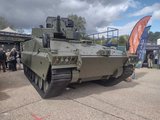
Air defence and counter-drone weapons continue to be developed, tested and demonstrated in anticipation of growing demand, with most solutions designed to be platform-agnostic and readily integrated onto suitable platforms.
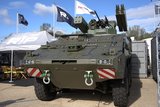
The US Army began its search for a 155mm tracked mobile tactical cannon in an effort that Shephard forecasts could be worth billions of dollars. Meanwhile, the UK DVD exhibition saw companies showcase their offerings for the British Army’s mobility and air defence requirements.
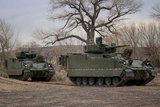
The development demonstrates how the platform could provide additional firepower and growth potential while the US Army progresses its long-term replacement for the Bradley.
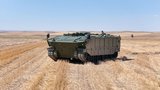
FNSS and PT Pindad are progressing the Indonesian tracked armoured personnel carrier programme as local production gets under way.
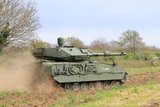
Firing trials of the Tulpar and Leonardo Hitfact Mk II combination follow an integration programme covering mechanical, electrical, electronic and software interfaces.

Connect with us on socials


