US Army RDECOM to evaluate TenCate ABDS


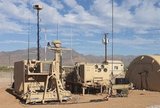
The US Army Research, Development, and Engineering Command (RDECOM) will evaluate the TenCate ABDS active blast countermeasure system under a multi-year cooperative research and development agreement (CRADA) announced on 12 September.
Under the agreement, TenCate engineers will demonstrate the ability of the TenCate ABDS active blast countermeasure system to protect combat and tactical ground vehicle crews against insurgent mines, roadside bombs and improvised explosive devices (IEDs).
The US Department of Defense has identified the prevention, identification and defeat of IEDs as a critical requirement, and is seeking to develop technologies capable of delivering this capability. RDECOM’s evaluation process aims to determine if the TenCate ABDS system solutions are robust in design and performance and ready for real world military applications.
The TenCate ABDS is an active underbody blast threat protection system, and works by minimising the transfer of mine blast energy experienced by a crew. The system efficiently manages the launch acceleration of the vehicle, its flight and the ensuing fall back to earth. This CRADA is a mechanism to utilise the capabilities and expertise of RDECOM’s various engineering centres with an integrated approach to testing and developing the system’s features, speeding its maturation and certifying its technology readiness level for future use on military platforms.
Mark Edwards, president, TenCate Advanced Armor USA, said: ‘The US Army has a clear vision on the protection of mounted troops and TenCate has developed important lifesaving technologies. We are committed to this world class ‘soldier survivability’ programme and determined to meet or exceed every mil-spec requirement necessary to quickly, yet safely, provide this threat protection solution to our troops.’


More from Land Warfare
-
![Europe commits to long-range fires but countries move in different directions]()
Europe commits to long-range fires but countries move in different directions
Sweden, Croatia and France are pursuing different rocket artillery solutions as European armies seek greater reach, survivability and industrial resilience.
-
![Polaris expands Arctic mobility offering as US military orders grow]()
Polaris expands Arctic mobility offering as US military orders grow
The Military 850 Voyageur 155 Crossover has secured orders from the US Army, Air Force and Marine Corps, addressing demand for agile Arctic mobility with passenger, cargo and towing capacity.
-
![Northrop Grumman pushing ahead with smaller Integrated Battle Command System]()
Northrop Grumman pushing ahead with smaller Integrated Battle Command System
Northrop Grumman’s Integrated Battle Command System is in service with Polish forces and is being introduced to US forces, with further development underway on the original platform as well as a smaller, more mobile system.
-
![UK’s ground-based air defence effort remains in assessment phase after third industry day]()
UK’s ground-based air defence effort remains in assessment phase after third industry day
The UK’s plan to introduce a new air defence capability into the British Army will cover short and medium-range defence as well as counter-uncrewed aerial system systems. Timelines are not yet laid out but industry is making plans.