UK Defence Investment Plan: What does it mean for the British Army?
The UK government has committed £1.1 billion to Challenger 3. (Photo: UK MoD/Crown Copyright)
The UK’s Defence Investment Plan splurges big for future air and naval programmes, including new hybrid ships, but there are fewer big-ticket items for British Army vehicles. Shephard’s Damian Kemp looks at the much delayed plan.


The UK government’s long-awaited Defence Investment Plan (DIP) is betting big on uncrewed and lower cost effects. The plan sits on top of a budget of £298 billion (US$395 billion) across the next four years which the government notes as £15 billion of additional spending on top of last year’s Spending Review.
A UK Ministry of Defence (MoD) official said: “The increase comprises an additional £11.6 billion in new cash from the exchequer for the department, and £3.4 billion of increased spending power by moving spending lines such as Ukraine security guarantees from MoD to the exchequer.”
The uncrewed element
Our news & analysis is now part of Defence Insight®
A Basic-level or higher Defence Insight subscription is now required to view this content.


More from Land Warfare
-
![How to breach a minefield: from traditional systems to modern techniques in action]()
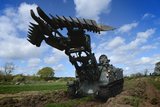
How to breach a minefield: from traditional systems to modern techniques in action
The news from Ukraine has again shown that antitank minefields and other obstacles on the battlefield, such as deep trenches, can play a key role in both offensive and defensive operations. Given this, there will always be a need to clear them, both during and after a conflict.
-
![British Army's open plan draws diverse offerings for Land Rover replacement]()
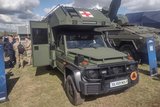
British Army's open plan draws diverse offerings for Land Rover replacement
The UK Ministry of Defence has avoided being prescriptive in its search to replace the British Army’s Land Rover, meaning vehicle types being offered range from Land Rover Defender Wolf II and Humvee to the hybrid series Fering Pioneer. What does this mean for the procurement process?
-
![DVD 2026: British Army’s Ajax back in the hands of users as part of a gradual return]()
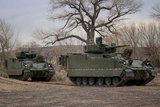
DVD 2026: British Army’s Ajax back in the hands of users as part of a gradual return
The introduction of Ajax vehicles into British Army service was stopped after operator health issues were reported during an exercise, but manufacturer General Dynamics Land Systems UK believes work over the past 10 months has dealt with the problems.