Unlocking the potential of Light Forces in modern warfare (Studio)
The Ukraine conflict has highlighted the strategic importance of “Light Forces” – rapidly deployable dispersed units, able to conduct an expanding range of mission sets. What technologies and equipment are needed to ensure their success in combat?


Brought to you in partnership with ST Engineering
Approaching its fifth year, the war in Ukraine is offering armed forces around the world important lessons applicable to contemporary and future conflicts. One example is the role of Light Forces, which when properly equipped and tasked can materially change outcomes on the battlefield.
According to Shephard Group’s Land Analyst, Dr Peter Magill, Light Forces typically comprise “agile, dismounted and lightly motorised infantry units” which can be fielded at short notice across an expansive selection of environments.
“The greater the reach, the better. This is why the UK and larger nations around the world are able to operate in different areas, whether they be urban, Arctic or tropical, depending upon the situation,” Magill said.
“Light Forces are not going to be frontline assault troops. Instead, they’re going to be in lighter 4x4 and armoured vehicles and can be used to hold positions or exploit gaps in enemy lines, or operate in areas like jungles and thick forests which are inaccessible to heavier units.”
Making capability affordable
According to the Head of International Business and Market Development for Defence and Public Security at ST Engineering, and former Chief Infantry Officer of the Singapore Army, BG (Ret) Chua Jin Kiat, Light Forces promise to remain a critical capability for modern armies seeking a more affordable means of operating in “highly fluid, fast-paced and mobile combat”.
Highlighting lessons learned from Ukraine, Chua described how the battlefield of today, and tomorrow, will heavily feature “tactical, lightweight and distributed forces who are nimble, survivable and self-sufficient in terms of lethality”.
“This is very much the way in Singapore, with the capacity to shoot first, by enhancing the decision-making cycle through the use of drones to enhance situation awareness beyond the visual battlespace,” he explained.
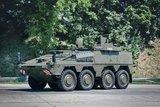
“Fifteen years ago, the Singapore Armed Forces started motorising the lightweight infantry after realising long-range movement on foot, carrying heavy combat loads over mountainous and jungle terrain, was unsustainable. This was when ST Engineering introduced the 8x8 Terrex infantry fighting vehicle (IFV) to enhance the mobility of the infantry units,” he continued.
“Today, with the evolution of drones, tactical unit commanders can observe the battlefield up to three or four kilometres in depth and identify the enemy before they see you. This gives you a good opportunity to strike them before they can hit you. He who sees and surgically strikes first is going to have the advantage.”
Creating survivable Light Forces
Magill also highlighted the importance of dispersing Light Forces across the battlefield to optimise levels of survivability against a well-equipped and highly capable adversarial force.
“Today, there’s a lot of heavier units which are much more at risk, or in danger of being taken out by increasingly smaller and sophisticated drones – the inverse of where we were about ten years ago. Being dispersed makes it a lot harder to be taken out by a drone,” he suggested.
“But now, as technology has improved, Light Forces are much more survivable. So, I think we’re definitely going to see a lot more units adopting that lighter role to adapt to the increasing range of threats that we’re seeing,” Magill added.
Considering the future evolution of Light Forces, he predicted increasing levels of employment for these types of formation, particularly in northern Europe.
“Armed forces are going to probably specialise more in those lighter forces, fighting in Arctic or sub-Arctic conditions. Light Forces would be really beneficial in the forests and swamps of Finland in particular, as we have seen historically.
“I don’t think the next war will necessarily be like Ukraine, but I do think we’re going to see a lot of the lessons learned from that with more mobile units and perhaps less heavy armour which, I think, will be used differently,” Magill concluded.
Networking multiple platforms
Beyond mobility, survivability and firepower, Chua also stressed the importance of connectivity, highlighting ST Engineering’s ongoing role supporting the Singapore Armed Forces’ digitalisation efforts to network together platforms and assets across multiple domains.
“Everything needs to be connected through different radio frequencies and waveforms. This isn’t an easy task and it’s a challenge we have been tackling in Singapore for a while now, by helping to build the digital and networked fighting force.” he said.
“Not every military can afford to buy new fleets of digitalised combat platforms. There is another way – legacy platforms can be upgraded with digital capabilities, integrating existing radios and other equipment, in an OEM-agnostic manner, and at a fraction of the price of purchasing new vehicle fleets. At ST Engineering, we have the experience to integrate surveillance, communications, fire control and battle management systems quickly, easily and cost-effectively,” he said, describing how “early mover” customers were understanding and appreciative of ST Engineering’s efforts in this area.

At London’s DSEI event in September, a variety of ST Engineering equipment was displayed on a total of nine tactical ground vehicles at the event – a move which Chua explained only went to further enhance the Group’s expertise in enabling Light Forces. The vehicle models involved were the Armormax Tac6 6x6 (displayed at ST Engineering’s booth), GM Defense LTV-C, Babcock HMT 400 and HMT 600, General Dynamics UK/Ford Ranger Super Duty and SSS LUV.
“DSEI generated a lot of interest, and we had many good conversations,” he confirmed, detailing ST Engineering’s role in a General Dynamics-Babcock demonstration at the event.
This saw ST Engineering’s 120mm Ground Deployed Advanced Mortar System’s (GDAMS) fire control system networked to in-service UK tactical communications, illustrating how fire missions can be executed through the “Digital Targeting Web faster and more securely than ever before”, according to Babcock.
The demonstration also underscored ST Engineering’s growing cooperation with original equipment manufacturers and small and medium enterprises around the world – a move which Chua said ensures localised production, in-country support and ultimately, stronger and more resilient defence ecosystems.
“Because we are located far away from Europe, partnerships are of critical importance to us. Not only do they reduce shipment costs, they ensure resilient, sovereign supply chains, encourage levels of technology transfer, and ultimately, help to address the unique operational requirements of each sovereign nation,” he explained, highlighting the Group’s cooperation with Babcock, Ultra Electronics and NP Aerospace.
Educating the operator
Finally, Chua discussed the Group’s track record in providing high-quality training for a conscript force with a large core of reserves in Singapore. This has shaped the DNA of ST Engineering, to develop capabilities that are easy to train, use and refresh, and highly digitalised for a technologically savvy soldier pool.
“In Singapore, the operator of a fighting vehicle is typically a 19-year-old conscript. So how do we reduce the cognitive load and enhance his decision-making in such a situation?”
“Years ago, it would take a long time for this operator to look through their sight and confirm whether a target was friend or foe. Today, everything is automated through machine learning and artificial intelligence so the system is good enough to identify and target an enemy vehicle, which means the only thing the operator needs to do is decide when to fire.
“But we are making engagement processes even smarter. For example, the vehicle detecting and identifying the enemy might not necessarily be in the best position to engage, so our fire control system will be able to calculate the most appropriate course of action for the wider force to engage the target,” Chua said.
“These are just a few examples of concepts of operation which ST Engineering can work through with any military force, to provide an instant upgrade in terms of Light Force capabilities,” he concluded.

More from Studio
-
![Layered protection: How air defence is adapting to rising drone and missile threats (podcast)]()
Layered protection: How air defence is adapting to rising drone and missile threats (podcast)
A surge in aerial threats – from advanced missiles to low-cost drones – is reshaping the way militaries approach air defence, driving demand for flexible, multi-layered solutions.
-
![Light Reconnaissance Strike – enabling a vital mission set (Studio)]()
Light Reconnaissance Strike – enabling a vital mission set (Studio)
A new system-of-systems concept will unlock digital integration of sensors and weapons for Light Forces, allowing them to shape the battlefield environment on their own terms and upgrade legacy platforms.
-
![Energy evolution: How laser defence systems are powering the next phase of air defence (podcast)]()
Energy evolution: How laser defence systems are powering the next phase of air defence (podcast)
Laser-based air defence is moving from promise to deployment as global threats evolve. In this special podcast, we explore how high-energy laser systems are reshaping interception strategies.
-
![Resilience, adaptiveness and collaboration vital for success in space (Studio)]()
Resilience, adaptiveness and collaboration vital for success in space (Studio)
Speakers at the Defence In Space Conference (DISC) 2025 highlighted the critical and evolving role of space in national security, defence and the global economy.
-
![Precision on Demand: The New Age of Loitering Weapons (Podcast)]()
Precision on Demand: The New Age of Loitering Weapons (Podcast)
Loitering munitions provide vital capabilities in the disrupted and unpredictable modern battlespace, from real-time ISR to a virtually “on demand” strike capability. Rafael is looking to the future of the technology, empowering systems to operate with increasing autonomy in hostile environments.
-
![Beyond Survivability: How Active Protection Systems Are Empowering Commanders (Podcast)]()
Beyond Survivability: How Active Protection Systems Are Empowering Commanders (Podcast)
As threats diversify and intensify, APS are proving essential not just for vehicle protection but also for enhancing operational freedom, effectiveness and mission success in contested environments.