


FNSS advances Indonesian Kaplan APC programme as local production expands
FNSS and PT Pindad are progressing the Indonesian tracked armoured personnel carrier programme as local production gets under way.


Photo: Rohde & Schwarz combat net radios will be installed in vehicles and static locations as well used by dismounted soldiers. (Image: Rohde & Schwarz)
Rohde & Schwarz has begun delivery of CNRs for German armed forces (Bundeswehr) following the selection and contract signing in December 2022 and the recent final confirmation of the procurement.
These radios will equip a range of operational platforms and dismounted soldiers in command functions. The company states that a ‘significant number of communications devices have already been delivered’.
The selected CNR is based on the system and waveforms of the Joint Service Interoperable Radio Equipment (SVFuA) developed and introduced for the German armed forces and is already in use in key systems of the land forces.
It includes various interoperable form factors, such as vehicle and handheld radios, fixed stations, backpack radios, and a tactical radio for airborne platforms. It provides secure and jam-resistant networking with the force’s national waveforms in parallel to trans-European interoperability with the ESSOR OC1 waveform.
Alexander Philipp, managing director of Rohde & Schwarz said: ‘This [marks] a major step towards the modernisation and digitalisation of the Bundeswehr, including the contributions [towards] Germany’s commitments to NATO and EU.’

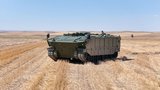
FNSS and PT Pindad are progressing the Indonesian tracked armoured personnel carrier programme as local production gets under way.
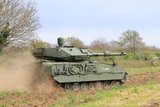
Firing trials of the Tulpar and Leonardo Hitfact Mk II combination follow an integration programme covering mechanical, electrical, electronic and software interfaces.
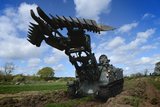
The news from Ukraine has again shown that antitank minefields and other obstacles on the battlefield, such as deep trenches, can play a key role in both offensive and defensive operations. Given this, there will always be a need to clear them, both during and after a conflict.
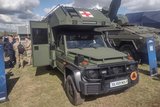
The UK Ministry of Defence has avoided being prescriptive in its search to replace the British Army’s Land Rover, meaning vehicle types being offered range from Land Rover Defender Wolf II and Humvee to the hybrid series Fering Pioneer. What does this mean for the procurement process?

The introduction of Ajax vehicles into British Army service was stopped after operator health issues were reported during an exercise, but manufacturer General Dynamics Land Systems UK believes work over the past 10 months has dealt with the problems.

Sweden, Croatia and France are pursuing different rocket artillery solutions as European armies seek greater reach, survivability and industrial resilience.

Connect with us on socials


