Raytheon tests compatibility between Excalibur and Caesar
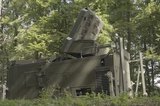
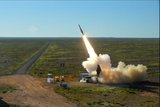
Caesar fires an Excalibur projectile. (Photo: Raytheon Missiles & Defense)
The Caesar-fired Excalibur directly struck two targets at a record-setting range of more than 46km.


Raytheon Missiles & Defense has announced on 18 January that its Excalibur artillery projectiles were fired from a Caesar self-propelled howitzer.
The test proved the compatibility between the two systems and the US Army’s Modular Artillery Charge System (MACS).
The demonstration was conducted in partnership with the US Army and the French company Nexter. According to a Raytheon press release, the Caesar-fired Excalibur directly struck two targets at a distance of more than 46km, marking a new record range for the projectile.
Integration with Caesar adds a level of mobility to Excalibur and shows its compatibility with NATO standards for both conventional and smart ammunition.
Raytheon emphasised that Excalibur is a precision weapon, which can hit at a radial miss distance of less than 2m from the target.
With its GPS-guided capabilities and multiple fuze modes, Excalibur is compatible with the M777, M109, M198, Archer, PzH2000 and SIAC systems.
Related Equipment in Defence Insight



More from Land Warfare
-
![Europe’s eastern flank moves on air defence radars with wider efforts also underway]()
Europe’s eastern flank moves on air defence radars with wider efforts also underway
Air defence radars have become more important assets in the past year with incursions in NATO countries on Europe’s eastern flank highlighting the need.
-
![Australia’s SM-2 land trial could reshape ADF medium-range air defence plans]()
Australia’s SM-2 land trial could reshape ADF medium-range air defence plans
The first ground launch of the SM-2 could offer Canberra a path to expand its missile defence capability by adapting systems already fielded across the ADF.
-
![New teams form to compete for British Army Land Rover replacement]()
New teams form to compete for British Army Land Rover replacement
The UK’s Land Mobility Programme Light Mobility Vehicle requirement is designed to replace the British Army’s ageing fleet of Land Rovers with a vehicle with a Gross Vehicular Mass of less than 3,500kg. It could be for as many as 6,000 vehicles.