Otokar develops AKREP II armoured vehicle family


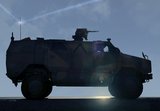
Otokar has developed a new generation family of AKREP II armoured vehicles, the company announced on 26 April.
Otokar partnered with AxleTech to develop the first version of the family, the AKREP IIe electric armoured vehicle technology demonstrator. AKREP IIe is equipped with an advanced electric-based power and propulsion solution that consists of a powerful electric motor, advanced battery pack and smart power control algorithm. The vehicle has reduced size and weight, increased mobility, and low acoustic and thermal signature.
AKREP II can be equipped with alternative powerplants (electric, diesel and hybrid). The vehicle’s four-wheel drive system and optional steerable axles provide superior manoeuvrability to the vehicle. With its four-wheel independent suspension and swift torque control of the power pack, the vehicle can travel over challenging terrain and traverse deep mud, snow or water.
The AKREP II can be configured for various types of weapon platforms for quick reaction, reconnaissance, scout and surveillance missions and base/air defence missions.
Daniel Chien, VP of business development at AxleTech, said: ‘AxleTech is committed to providing innovative electric powertrain systems to complement our field-proven and industry-leading drivetrain solutions for the defence industry. Our collaboration with Otokar demonstrates our shared values of providing forward-thinking products for customers and staying ahead of trends.’


More from Land Warfare
-
![AUSA 2026: CUAS market expands as suppliers target new threats and operational requirements]()
AUSA 2026: CUAS market expands as suppliers target new threats and operational requirements
New developments from MARSS, MyDefence, Mountain Horse Solutions and Rafael suggest that future counter-drone protection will increasingly depend on combining advanced detection, rapid interception and integrated defensive networks.
-
![US Army seeks CAML-Lite autonomous launcher prototypes for 2027 live-fire trials]()
US Army seeks CAML-Lite autonomous launcher prototypes for 2027 live-fire trials
The optionally crewed, C-130-transportable platforms would combine modular offensive and defensive fires with autonomous resupply, with demonstrations planned for Talisman Sabre 2027.
-
![AUSA 2026: Nammo advances 155mm ramjet artillery technology for extended-range fire]()
AUSA 2026: Nammo advances 155mm ramjet artillery technology for extended-range fire
Nammo is developing new artillery ammunition designed to extend firing ranges, combining ramjet propulsion research with conventional, base-bleed and rocket-assisted projectile designs.