


BAE Systems looks beyond the M113 replacement as it tests 30mm AMPV
The development demonstrates how the platform could provide additional firepower and growth potential while the US Army progresses its long-term replacement for the Bradley.


One of the three new 8x8 heavy recovery vehicles for the NZDF. (Photo: Rheinmetall)
Rheinmetall announced on 8 December that it handed over three HX44M 8x8 heavy recovery vehicles to the New Zealand Defence Force (NZDF) in a ceremony on 25 November.
The company is also providing initial training on the vehicle with the NZDF.
The HX44Ms were ordered in December 2018. According to Shephard Defence Insight, the NZDF had expected to receive them in 2020 to replace five ageing M1089A1R wreckers.
Gary Stewart, MD of Rheinmetall Defence Australia, said ‘this enhanced recovery capability’ complements 194 HX-series Medium and Heavy Operational Vehicles (MHOV) already in NZDF service for training, operations and HADR.
The HX 8x8 heavy recovery vehicles feature capabilities ‘specifically developed to meet the current and future operational needs of the NZDF’, Rheinmetall noted.
For example, the three new vehicles are the first in the world to use an Integrated Armoured Swap Cabin that allows easy configuration to suit operational needs.
Each HX44M is 2.55m wide and can traverse 1.4m-wide ditches or cross flooded areas 1.5m deep, as well as scale 60° gradients and 30° side slopes. The vehicle can also function in extreme temperatures, ranging from -32°C to 49°C.

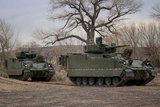
The development demonstrates how the platform could provide additional firepower and growth potential while the US Army progresses its long-term replacement for the Bradley.
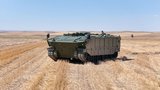
FNSS and PT Pindad are progressing the Indonesian tracked armoured personnel carrier programme as local production gets under way.
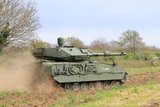
Firing trials of the Tulpar and Leonardo Hitfact Mk II combination follow an integration programme covering mechanical, electrical, electronic and software interfaces.
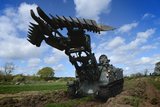
The news from Ukraine has again shown that antitank minefields and other obstacles on the battlefield, such as deep trenches, can play a key role in both offensive and defensive operations. Given this, there will always be a need to clear them, both during and after a conflict.
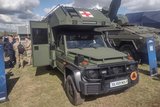
The UK Ministry of Defence has avoided being prescriptive in its search to replace the British Army’s Land Rover, meaning vehicle types being offered range from Land Rover Defender Wolf II and Humvee to the hybrid series Fering Pioneer. What does this mean for the procurement process?

The introduction of Ajax vehicles into British Army service was stopped after operator health issues were reported during an exercise, but manufacturer General Dynamics Land Systems UK believes work over the past 10 months has dealt with the problems.

Connect with us on socials


