ATHENA defeats airborne targets


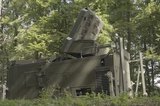
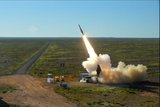
Lockheed Martin has demonstrated its prototype Advanced Test High Energy Asset (ATHENA) laser weapon system at White Sands Missile Range, New Mexico.
During testing with the US Army’s Space and Missile Defense Command, the 30kW class ATHENA laser system brought down five 10.8ft wingspan Outlaw UAS. The weapon employed advanced beam control technology and an efficient fibre laser.
The test saw the laser system defeating airborne targets in flight by causing loss of control and structural failure.
Lockheed Martin and the army are now conducting post mission reviews, and data collected will be used to further refine the system, improve model predictions and inform development of future laser systems.
ATHENA is a transportable ground-based system powered by a compact Rolls-Royce turbo generator. It is currently being used as a test-bed for demonstrating technologies required for the development of military laser weapon systems.
Keoki Jackson, chief technology officer, Lockheed Martin, said: ‘The tests at White Sands against aerial targets validated our lethality models and replicated the results we’ve seen against static targets at our own test range.
‘As we mature the technology behind laser weapon systems, we’re making the entire system more effective and moving closer to a laser weapon that will provide greater protection to our warfighters by taking on more sophisticated threats from a longer range.’



More from Land Warfare
-
![Europe’s eastern flank moves on air defence radars with wider efforts also underway]()
Europe’s eastern flank moves on air defence radars with wider efforts also underway
Air defence radars have become more important assets in the past year with incursions in NATO countries on Europe’s eastern flank highlighting the need.
-
![Australia’s SM-2 land trial could reshape ADF medium-range air defence plans]()
Australia’s SM-2 land trial could reshape ADF medium-range air defence plans
The first ground launch of the SM-2 could offer Canberra a path to expand its missile defence capability by adapting systems already fielded across the ADF.
-
![New teams form to compete for British Army Land Rover replacement]()
New teams form to compete for British Army Land Rover replacement
The UK’s Land Mobility Programme Light Mobility Vehicle requirement is designed to replace the British Army’s ageing fleet of Land Rovers with a vehicle with a Gross Vehicular Mass of less than 3,500kg. It could be for as many as 6,000 vehicles.