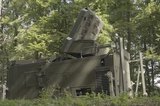
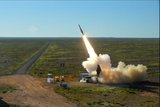
Lockheed obtains new OpFires contract modification
Risk-reduction testing will achieve critical design maturity by January 2022.


Lockheed Martin Missiles and Fire Control has received another contract modification from DARPA for work on the Operational Fires (OpFires) Integrated Weapon System Phase 3 programme.
The company will conduct risk-reduction testing to achieve ‘system-level critical design maturity’ by January 2022, the DoD announced on 8 January.
DARPA awarded the original $31.9 million contract to Lockheed Martin in January 2020, followed by a $7.45 million modification six months later.
OpFires Integrated Weapon System Phase 3 is intended to enable capabilities for a mobile, ground-launched tactical weapon delivery system capable of carrying various payloads.
As part of our promise to deliver comprehensive coverage to our Defence Insight and Premium News subscribers, our curated defence news content provides the latest industry updates, contract awards and programme milestones.

More from Land Warfare
-
![Europe’s eastern flank moves on air defence radars with wider efforts also underway]()
Europe’s eastern flank moves on air defence radars with wider efforts also underway
Air defence radars have become more important assets in the past year with incursions in NATO countries on Europe’s eastern flank highlighting the need.
-
![Australia’s SM-2 land trial could reshape ADF medium-range air defence plans]()
Australia’s SM-2 land trial could reshape ADF medium-range air defence plans
The first ground launch of the SM-2 could offer Canberra a path to expand its missile defence capability by adapting systems already fielded across the ADF.
-
![New teams form to compete for British Army Land Rover replacement]()
New teams form to compete for British Army Land Rover replacement
The UK’s Land Mobility Programme Light Mobility Vehicle requirement is designed to replace the British Army’s ageing fleet of Land Rovers with a vehicle with a Gross Vehicular Mass of less than 3,500kg. It could be for as many as 6,000 vehicles.