Israel Aerospace Industries signs two loitering munitions deals
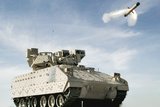
Rotem has been in service with four European countries and IAI has just signed a deal to supply unspecified loitering munitions. (Photo: IAI)
IAI has developed several loitering munitions or attack UAS including Harpy NG, Harop, Rotem and Mini Harpy. It has also been developing Point Blank, described as a ‘hand-launched electro-optical guided missile’ but much like the company’s loitering munitions can dwell while confirming a target’s nature.


Israel Aerospace Industries (IAI) has signed two separate agreements with two countries to deliver long-range loitering munitions under deals worth a combined value of US$145 million.
The deal for unspecified systems to undisclosed users has followed contracts the company signed in June with three NATO countries worth several million dollars to supply Rotem loitering munitions which in turn followed a similar agreement a month earlier with Estonia for Rotems.
Two years earlier, IAI had secured contracts worth more than $100 million including winning an international tender for the sale of Rotem to a foreign country, sale of the naval Harop system to the navy of a country in Asia and sale of the ground version of the Harop to another customer in Asia.
The success of attack UAS, whether dedicated or opportunistically modified, by both sides in the Ukraine war has increased focus on IAI’s offerings and its heritage with the development of Harpy stretches back almost two decades.
While the systems sold under the current contract remained unknown, it was likely it could be Rotem which as a quadcopter system is better able to loiter, easier to retrieve if a mission is cancelled, safer to operate and has already been used by as many as six countries.
In July 2023, MBDA Germany announced that it had signed a cooperation agreement with IAI for the production, integration, sales and marketing of the latter’s loitering munition products in Germany, explicitly aimed at filling capability gaps in the German Air Force, Navy and Army.
Related Equipment in Defence Insight



More from Land Warfare
-
![Front-line support: how UK industry is helping tackle Ukraine’s landmine challenges]()
Front-line support: how UK industry is helping tackle Ukraine’s landmine challenges
Pearson Engineering has provided equipment and engineering expertise to the Armed Forces of Ukraine since the beginning of the full-scale Russian invasion in 2022. The British company is now working to deepen engagement with the Ukrainian defence industry, expanding its support for the country’s population and laying the foundations for future technological innovation.
-
![AUSA 2026: companies adapt munitions and missiles for greater effect at lower costs]()
AUSA 2026: companies adapt munitions and missiles for greater effect at lower costs
Rather than developing entirely new weapons, defence companies are looking to build on existing weapons and systems to deliver greater capability, control costs and accelerate fielding.
-
![With changing patterns in Middle Eastern procurement, is Europe missing out?]()
With changing patterns in Middle Eastern procurement, is Europe missing out?
Traditional suppliers are struggling to meet the Middle East’s armoured vehicle modernisation needs, creating opportunities for South Korean manufacturers and regional defence industries.
-
![AUSA 2026: CUAS market expands as suppliers target new threats and operational requirements]()
AUSA 2026: CUAS market expands as suppliers target new threats and operational requirements
New developments from MARSS, MyDefence, Mountain Horse Solutions and Rafael suggest that future counter-drone protection will increasingly depend on combining advanced detection, rapid interception and integrated defensive networks.