


Tulpar firing trials expand Hitfact Mk II platform options
Firing trials of the Tulpar and Leonardo Hitfact Mk II combination follow an integration programme covering mechanical, electrical, electronic and software interfaces.


The VURAL radar jammer has entered service with the Turkish Army. This new system is complemented by the ILGAR jammer which targets hostile communications systems. (Photo: Aselsan)
Military officials in Turkey have been generally tight-lipped about progress in developing new offensive EW capabilities, but Ismail Demir, head of the national defence procurement agency SSB, revealed via social media in late December 2021 that Aselsan has begun deliveries of its VURAL electronic attack system to the Turkish Army.
Local reports say that VURAL is designed to attack hostile radars. It was developed as the result of a requirement for a radar jammer under the REDET-II project, and will complement Aselsan’s ILGAR communications electronic attack system that was delivered to the Turkish armed forces last year. ILGAR is
Our news & analysis is now part of Defence Insight®
A Basic-level or higher Defence Insight subscription is now required to view this content.

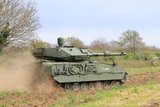
Firing trials of the Tulpar and Leonardo Hitfact Mk II combination follow an integration programme covering mechanical, electrical, electronic and software interfaces.
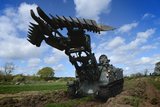
The news from Ukraine has again shown that antitank minefields and other obstacles on the battlefield, such as deep trenches, can play a key role in both offensive and defensive operations. Given this, there will always be a need to clear them, both during and after a conflict.
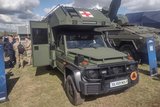
The UK Ministry of Defence has avoided being prescriptive in its search to replace the British Army’s Land Rover, meaning vehicle types being offered range from Land Rover Defender Wolf II and Humvee to the hybrid series Fering Pioneer. What does this mean for the procurement process?

The introduction of Ajax vehicles into British Army service was stopped after operator health issues were reported during an exercise, but manufacturer General Dynamics Land Systems UK believes work over the past 10 months has dealt with the problems.

Sweden, Croatia and France are pursuing different rocket artillery solutions as European armies seek greater reach, survivability and industrial resilience.
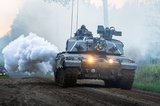
The bilateral agreement between the UK and Estonia comes as both countries explore how dispersed troops, drones, digital targeting, anti-tank weapons and increasingly long-range fires can complement the combat mass traditionally provided by heavy armour.

Connect with us on socials


