


New uses for proven weapons: adapting the Chain Gun for CUAS
Northrop Grumman’s M230LF Chain Gun is finding a growing role in countering uncrewed aerial systems, with the 30mm weapon already deployed to Ukraine and adopted by US forces.


FAAC has received funding from the US Army’s Program Executive Office for Simulation, Training, and Instrumentation (PEO STRI) to reconfigure previously-contracted training suites to meet the US Army’s current operational concept for route clearance. The funding includes a $20.4 million order with up to $15.6 million in options.
FAAC is part of Arotech Corporation’s training and simulation division. The change order covers reconfiguration to 28 Virtual Clearance Training Suites (VCTS), as well as options for continued contractor logistical support of the fielded systems.
VCTS simulates the wide array of large and small technical devices, purpose-built mine-protected security, detection, and clearing vehicles to train the ever-evolving tactics and techniques used by the US Army to combat improvised explosive devices.
Kurt Flosky, executive vice president, Arotech Training and Simulation, said: ‘It is important to train as you fight; because you fight as you have trained. We are very pleased to receive this extension to our existing VCTS programme.
‘This change proposal will utilise the inherent flexibility of the solution to ensure that the fielded VCTSs simulate the actual configuration of today’s route clearance teams as their mission and equipment continues to evolve. The fielded systems to date have been well received by the units and we are pleased to be able to continue our support of the VCTS programme and play a key role in maximising its effectiveness.’
The reconfiguration work will begin immediately and continue through 2016.

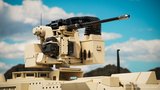
Northrop Grumman’s M230LF Chain Gun is finding a growing role in countering uncrewed aerial systems, with the 30mm weapon already deployed to Ukraine and adopted by US forces.
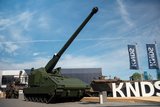
KNDS Deutschland has fitted a tracked RCH 155 with a new KNDS France 155mm/58cal ordnance, opening a potential path towards significantly longer-range artillery and a future beyond the current NATO standard.

It is believed that three companies did not make the downselect but a dark horse in Spain’s Iturri is believed to have got through.
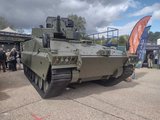
Air defence and counter-drone weapons continue to be developed, tested and demonstrated in anticipation of growing demand, with most solutions designed to be platform-agnostic and readily integrated onto suitable platforms.
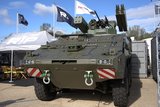
The US Army began its search for a 155mm tracked mobile tactical cannon in an effort that Shephard forecasts could be worth billions of dollars. Meanwhile, the UK DVD exhibition saw companies showcase their offerings for the British Army’s mobility and air defence requirements.
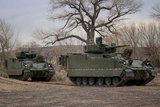
The development demonstrates how the platform could provide additional firepower and growth potential while the US Army progresses its long-term replacement for the Bradley.

Connect with us on socials


