


Rheinmetall Nordic’s Ragnarok mortar upgrade shows strong integration potential
The Ragnarok Mortar Mission Module has demonstrated its ability to quickly switch platforms, presenting scope for it to be employed for multiple requirements.


Elbit Systems of America has received a contract from the US Marine Corps (USMC) for the Common Laser Range Finder-Integrated Capability (CLRF-IC), the company announced on 22 March.
The period of this $73.4 million, indefinite delivery/indefinite quantity contract extends through March 2020. Under this contract, Elbit has received an initial order worth $7.5 million.
Raanan Horowitz, president and CEO, Elbit Systems of America, said: 'We are pleased to provide the USMC with their new rugged CLRF-IC, a lightweight system that is mission-ready and safer for the foot-mobile marine.
'Leveraging the innovative capabilities of our imaging, range finding, and degraded environment navigation solutions, marines are now able to acquire targets without breaking cover from their concealed fighting positions and minimise impact while on the move.'
The CLRF-IC replaces the USMC's current equipment with a system with 24-hour observation capability, the ability to confirm spot on target with laser designation systems and target location capability in magnetically disturbed environments, areas with overhead clutter, and in GPS-denied situations.


The Ragnarok Mortar Mission Module has demonstrated its ability to quickly switch platforms, presenting scope for it to be employed for multiple requirements.

The British Army’s plans to replace thousands of vehicles have been troubled with resets, delays and change. It is possible, however, that genuine progress is being achieved on two of the three segments in the programme.

The US Army’s organic industrial base still uses World War II production methods and technologies, leading to delays and cost overruns and limiting its ability to produce critical ammunition and maintain its ground fleet in operation.
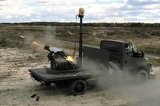
Manufacturers are speeding up their counter-drone development efforts as countries increasingly focus on procurements to provide battlefield and national protection.

Finnish company SCATA will use the Texelis Celeris chassis for a new vehicle similar to the Serval 4x4 which Texelis is building with KNDS France for the French Army.

The proposed $920 million deal would provide Sweden with a step up from its existing tube artillery and align the country with other northern European nations that have selected the HIMARS platform.

Connect with us on socials


