DARPA looks to improve armoured vehicle agility


DARPA is set to kick off its Ground X-Vehicle Technology (GXV-T) programme shortly, as it seeks engagement with non-traditional contributors to pursue fundamental research and development of groundbreaking future capabilities.
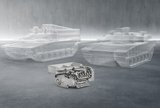
The GXV-T programme aims to improve the survivability of ground-based armoured fighting vehicles by increasing vehicle agility.
Today’s armoured vehicles are increasingly burdened with heavy armour to protect occupants against progressively sophisticated weaponry in high threat environments; and, as vehicles become heavier they become inherently less agile.
Increasing vehicle agility involves the ability to autonomously avoid incoming threats, either by rapidly moving out of the way or reconfiguring the vehicle so incoming threats have a low probability of hitting and penetrating the vehicle.
GXV-T seeks to develop revolutionary technologies to enable a layered approach to protection that would use less armour more strategically and improve vehicles’ ability to avoid detection, engagement and hits by adversaries. Such capabilities would enable smaller, faster vehicles in the future to more efficiently and cost-effectively tackle varied and unpredictable combat situations.
GXV-T will assess a number of approaches to achieve this, including active repositioning of armour, burst acceleration and suspensions that would enable the vehicle to dodge.
DARPA expects to release two Broad Agency Announcements with full technical details for GXV-T shortly.


More from Land Warfare
-
![Drone wars: countries are looking for answers but do companies have the solutions?]()
Drone wars: countries are looking for answers but do companies have the solutions?
Manufacturers are speeding up their counter-drone development efforts as countries increasingly focus on procurements to provide battlefield and national protection.
-
![Sweden seeks US HIMARS missile system to expand long-range strike capability]()
Sweden seeks US HIMARS missile system to expand long-range strike capability
The proposed $920 million deal would provide Sweden with a step up from its existing tube artillery and align the country with other northern European nations that have selected the HIMARS platform.
-
![Thales Storm 2 counter-drone system being evaluated by potential customers]()
Thales Storm 2 counter-drone system being evaluated by potential customers
The attack drone threat from first-person view uncrewed aerial systems has been highlighted by recent conflicts and Thales has adapted its Storm 2 counter-improvised explosive device jammer to provide protection.